Yay Meaning in Text: How To Give Flirty Reply
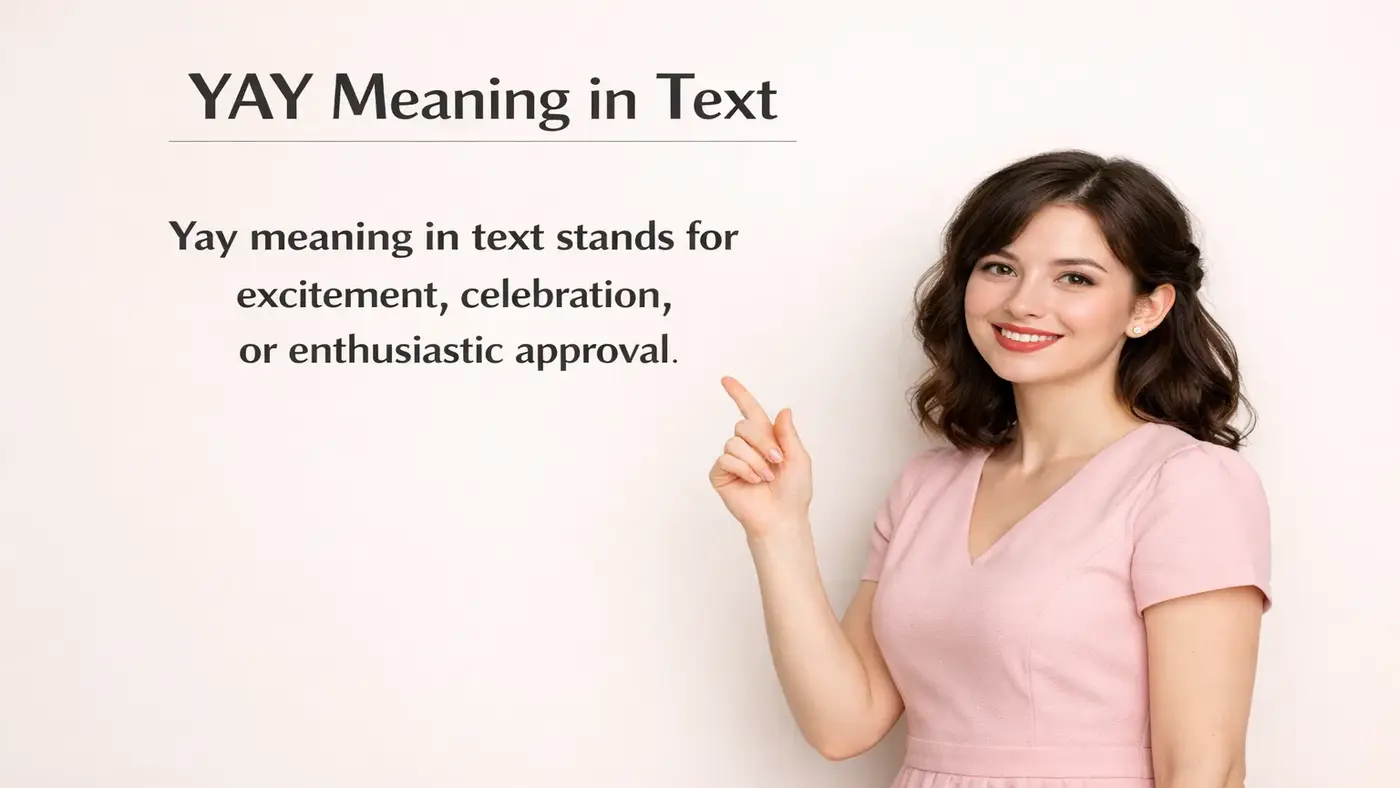
Yay meaning in text stands for excitement, celebration, or enthusiastic approval — a short, punchy exclamation people send when something good happens, something long-awaited finally arrives, or someone shares news worth celebrating. It carries genuine warmth without any of the effort of writing more words.
People reach for it in moments that call for a reaction faster than a full sentence. A friend texts that they passed their exam. Someone confirms plans finally came together. The reply is yay. Clean, immediate, and completely clear.
Origin and Cultural Footprints
Yay meaning in text connects directly to spoken English, where “yay” has functioned as a celebratory exclamation for decades. The word traces back to the mid-twentieth century as a variant of “yea,” itself a long-standing English affirmative. Over time, the spelling shifted to capture the sound more accurately, and “yay” became the standard written form of the cheer most people already said out loud.
The move from spoken to typed was effortless because the word required no compression or transformation. It already fit the casual, spontaneous register of text conversation perfectly. From early instant messaging platforms through SMS culture and into every social media comment section today, yay traveled unchanged because it already belonged to informal communication. No adaptation needed. It just landed and stayed.
Other Definitions of Yay
Outside of its celebratory use, yay carries a few alternate meanings worth understanding:
- Emphasis on size or height — In spoken American English, “yay big” or “yay high” uses yay as a demonstrative word meaning “about this much,” typically paired with a hand gesture. This usage rarely appears in text form since the gesture does all the work, but it occasionally surfaces in written storytelling.
- Slang for cocaine — In some street slang communities, “yay” or “yayo” refers to cocaine. This meaning appears in hip-hop lyrics, crime fiction, and certain online forums. Context separates this from the celebratory use immediately, but knowing it exists helps avoid misreads in ambiguous content.
- Archaic affirmative — As a variant of “yea,” yay historically served as a simple yes or agreement marker in formal and religious contexts. This usage belongs to historical texts and certain ceremonial language rather than anything you would encounter in a current group chat.
Who Uses It Most?
Yay sits in an interesting position among reaction words because it crosses generations more naturally than most slang. Children use it without irony. Adults use it with full sincerity. Gen Z uses it with deliberate ironic awareness. The word functions across all three registers, which gives it unusual range.
Here is a clear breakdown of which groups reach for yay and how it lands in each context:
| Group | How They Use Yay | Why It Works |
|---|---|---|
| Gen Z | Sincere celebration and ironic enthusiasm depending on context | Flexible enough to carry genuine joy or deadpan humor |
| Millennials | Genuine celebratory reaction in personal and group chats | Nostalgic, warm, and immediately readable |
| Teenagers | Reacting to good news from friends on any platform | Short, expressive, requires zero explanation |
| Content creators | Celebrating milestones, reacting to viewer comments | Signals approachability and authentic enthusiasm |
| Parents and family group chats | Sharing excitement about good news or achievements | Universally understood across age groups |
| K-pop and fan communities | Reacting to releases, announcements, and fandom news | High-emotion spaces where yay fits naturally |
Usage of Yay in Different Contexts
In personal texting, yay functions as a pure celebratory reaction that arrives before any detailed response. Someone announces they got the job, the apartment, or the grade they needed. The first reply is “yay!!” and the longer, more considered response follows after. That sequencing matters because the yay signals that the news landed immediately and the sender cares about it. The exclamation points do extra emotional work in this context.
In group chats, yay gets deployed as a collective cheer that everyone in the thread understands without needing to ask what prompted it. One person announces something good, and a chain of “yay,” “yay!!” and “YAY” follows down the thread from multiple people. Each one reads as a genuine individual reaction even though they arrive seconds apart. The word scales effortlessly from one-on-one to group conversation without losing any of its warmth.
How Gen Z Uses Yay Today
Gen Z has a specific relationship with words that sound childlike or unguarded, and yay sits squarely in that category. Using it sincerely in 2024 carries a layer of self-awareness that older generations do not always register. A twenty-three-year-old typing “yay” knows it sounds like a five-year-old at a birthday party. That awareness is part of what makes it land as charming rather than immature in the right context.
The ironic deployment is where Gen Z adds its own signature layer. Sending “yay” after something mildly inconvenient or completely anticlimactic turns the word into dry humor. “The meeting got moved to 7am. yay.” uses the celebratory word to signal the exact opposite of celebration, and everyone reading it gets the joke immediately. The yay meaning in text bends to carry sarcasm just as naturally as it carries genuine joy, depending entirely on what surrounds it.
Does Yay Mean Yes?
This confusion comes from yay’s historical roots as a variant of “yea,” which does mean yes. In old formal English and certain voting contexts, “yays and nays” means votes for and against. That usage still appears in parliamentary language and formal proceedings, which is where the confusion originates.
In modern texting and casual conversation, yay does not mean yes. Nobody sends “yay” when they mean “yes” and expects the other person to read it as a simple affirmative. Yay signals excitement and celebration. Yes confirms agreement or answers a question. Mixing the two up in a text exchange would produce genuinely confusing results. The historical connection between the words is real, but the functional overlap in everyday text communication is close to zero.
Meaning Across Social Media
| Platform | Yay Meaning | How It’s Used |
|---|---|---|
| Excitement or celebration | Personal and group chat reactions to good news or confirmations | |
| Twitter / X | Celebration or ironic enthusiasm | Reacting to announcements, news, or personal wins |
| Excitement or collective celebration | Comments under achievement posts, story reactions, DM replies | |
| TikTok Comments | Celebration or sarcastic cheer | Reacting to creator news, wins, or mildly disappointing updates |
| Snapchat | Genuine enthusiasm | Quick celebratory replies in streaks and personal DMs |
| Discord | Celebration or playful irony | Server reactions to game wins, announcements, or community news |
| Celebration or deadpan cheer | Comment thread reactions to personal wins or community milestones |
Common Confusions & Wrong Interpretations
- Yay confused with yea — These two words share roots and look similar enough to cause misreads. Yea functions as a formal yes or a casual affirmative in some regional dialects. Yay expresses enthusiasm or celebration. Someone reading “yay” as a simple “yes” misses the emotional register entirely.
- Yay read as sarcasm when it is sincere — Because Gen Z uses yay ironically so often, some recipients automatically assume sarcasm when none exists. A genuine celebratory yay from a close friend can land as passive-aggressive if the reader’s default interpretation is ironic. Knowing the sender’s usual communication style resolves this almost every time.
- Yay confused with yay (size reference) — The spoken “yay big” usage almost never appears in text form, but when it does, it can momentarily confuse readers who only know the celebratory version. Context makes the meaning clear immediately, but the double life of the word is worth knowing.
- Lowercase vs uppercase tone difference — “yay” in lowercase reads softer and more understated, sometimes even muted or flat. “YAY” in full caps reads as loud, enthusiastic, and fully committed. The same word in different cases sends meaningfully different emotional signals, and most experienced texters adjust this deliberately.
Similar Terms, Alternatives & Related Slang
- Woohoo — More exuberant than yay, higher energy, less likely to read as ironic
- Yes! — Direct affirmative with enthusiasm; cleaner than yay when sincerity needs to be obvious
- Let’s go — Energetic celebration often used for achievements or anticipated events
- Hype — Signals excitement about something upcoming rather than reacting to something that already happened
- Lit — Describes something as exciting or excellent; more about the thing than the reaction to it
- Poggers — Gaming-origin celebration term; more niche than yay but carries similar enthusiastic energy
- Slay — Celebratory affirmation of someone doing something well; directional where yay is general
- W — Single-letter win declaration; faster and more minimal than yay, same celebratory function
How to Reply When Someone Says Yay
If someone sends you yay in response to your news, they are telling you they care and they are happy for you. The natural follow-up is to keep the positive energy going rather than deflecting it. “Thank you, I’m so relieved” or “right?? finally!!” matches the warmth they set and invites more conversation. Responding flatly to a yay makes the exchange feel like it hit a wall, which rarely reflects how either person actually feels.
If you sent yay to someone and they seem unsure how to read it, a quick follow-up removes any ambiguity. “Genuinely excited for you btw” or adding an emoji alongside it reinforces that the reaction was sincere and not ironic. Most people appreciate knowing their news landed well. Yay opens that door. Walking through it with a little more warmth keeps the conversation exactly where it belongs.
Conclusion
Yay meaning in text carries something most words cannot manage across this many generations: genuine warmth that works at face value and also bends into irony without breaking. Three letters, one clear emotion, and enough range to cover almost any moment worth reacting to. That combination explains everything about why it lasted.
Simple words outlast complicated ones. Yay proves the point every single time.
FAQs
Yay does not stand for anything. It is an expression of happiness or excitement.
Yes. Yay is a positive word used to show joy or approval.
Common slang alternatives are woohoo, yes, yesss, and heck yeah.
It means he feels happy, excited, or agrees with something.
Yay means a simple expression of joy, celebration, or success.

GenZ Slang Writer & Internet Culture Expert Layla Brooks has spent 2+ years tracking how GenZ slang evolves across TikTok, Twitter, and everyday conversations. From decoding viral phrases to explaining what words actually mean in real life, Layla writes content that feels native to the culture, not forced. If a word is trending, Layla already knows what it means and why it matters.