JSP Meaning in Text: How to Reply to Flirty Girl
What Does JSP Mean in Text?
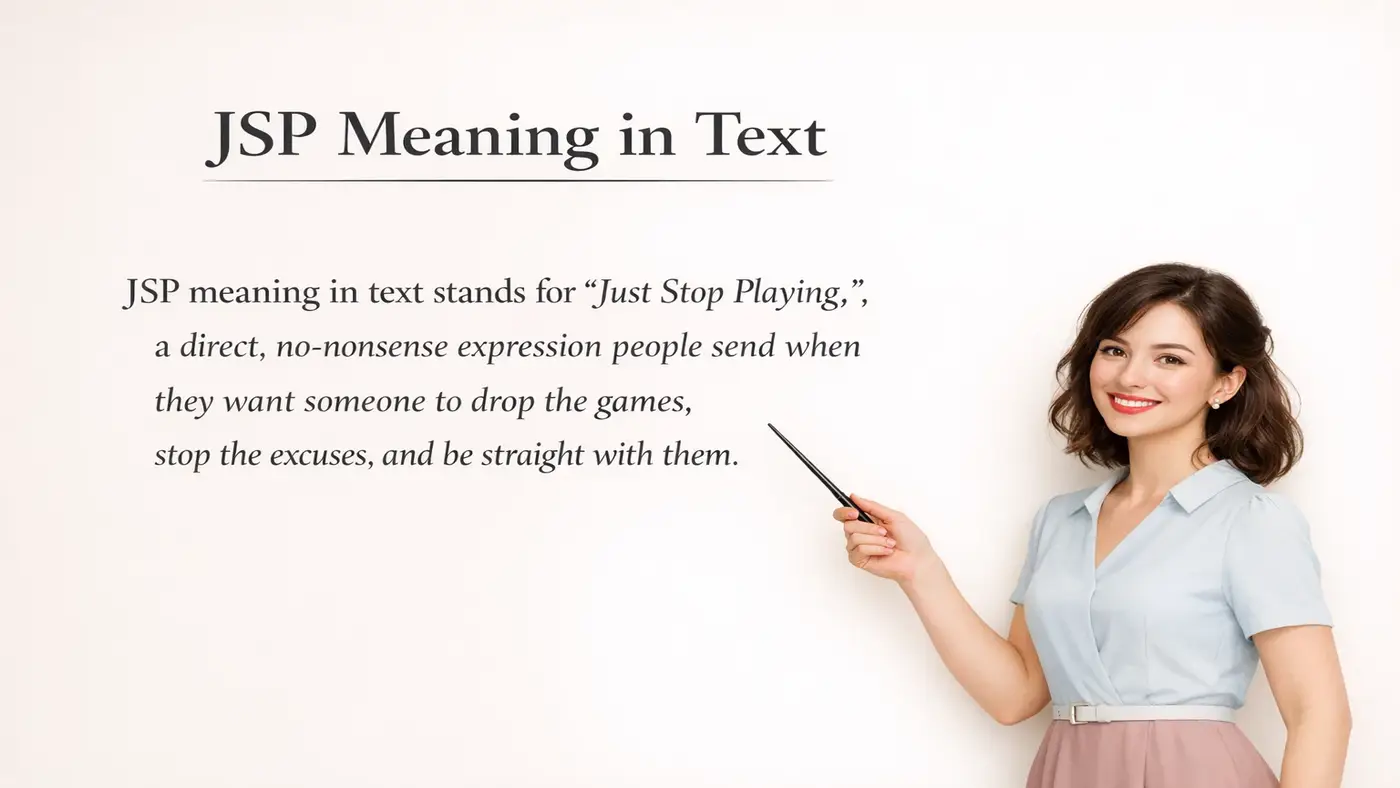
JSP meaning in text stands for “Just Stop Playing,” a direct, no-nonsense expression people send when they want someone to drop the games, stop the excuses, and be straight with them. It is frustration and demand delivered in three letters.
You will see it when someone has been dodging a question, running circles around a topic, or acting in a way the other person finds dishonest or evasive. JSP closes the gap between patience and confrontation without crossing all the way into aggression.
Origin and Cultural Footprints
JSP meaning in text grew from urban and hip-hop influenced communication culture where directness is a social value and calling out games or dishonesty is a normal part of honest conversation. The phrase “stop playing” already existed in spoken culture as a sharp, familiar command before it found its abbreviation.
The compressed version spread through Twitter, Snapchat, and iMessage threads where fast, expressive reactions matter more than full sentences. JSP traveled through the same channels as similar direct expressions and stuck because it fills a specific conversational gap, which is the moment between mild frustration and full confrontation, that no other abbreviation covers as precisely.
Other Meanings of JSP
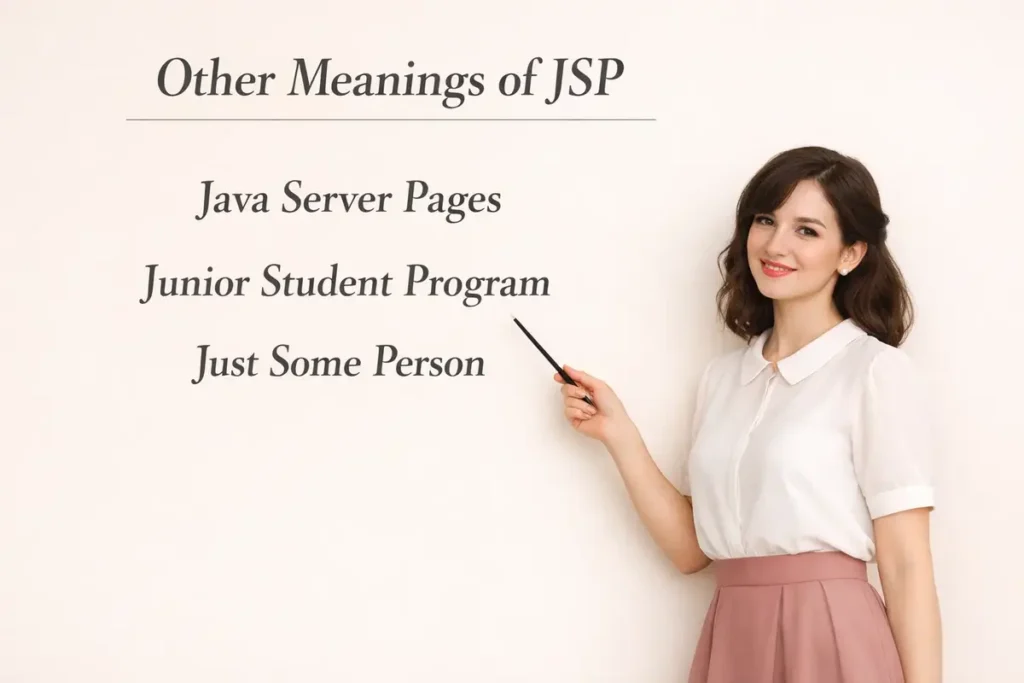
- Java Server Pages — A widely used technical abbreviation in software development, web programming, and computer science education. Developers and programmers encounter JSP constantly in documentation, coding tutorials, and technical discussions with zero connection to casual texting slang.
- Junior Student Program — An educational and organizational abbreviation used in academic institutions, youth programs, and extracurricular activity documentation. Formal, institutional, and entirely separate from any social media usage.
- Just Some Person — An occasional casual usage where JSP describes an anonymous or unremarkable individual in a conversation. Rare in mainstream texting but surfaces in certain community spaces where dismissive references to unknown people appear regularly.
Why Does JSP Have Multiple Meanings?
JSP sits in a category where professional and technical communities claimed the same letters long before text slang assigned them a new meaning. Java Server Pages has been a recognized programming term since the late 1990s, while the “Just Stop Playing” slang reading developed organically through street and online culture in a completely separate space.
That coexistence rarely creates confusion because the contexts announcing each meaning are so different that the correct reading presents itself immediately. A developer forum discussing JSP has nothing to do with interpersonal frustration. A personal conversation using JSP after someone has been evasive has nothing to do with web technology.
Who Uses It Most?
JSP belongs to people who communicate with directness and have reached the point where indirect communication no longer feels acceptable. The groups that reach for it most tend to value honesty over politeness when the two come into conflict.
Here is a clear breakdown of which groups use JSP most and how each group deploys it:
| Group | How They Use JSP | Why It Works |
|---|---|---|
| Gen Z | Calling out evasive or dishonest behavior in DMs | Direct, fast, and signals frustration without writing a paragraph |
| Teenagers | Reacting to friends who are playing games in conversations | Low-effort way to demand honesty without making it a major confrontation |
| Hip-hop and urban culture communities | Expressing impatience with someone’s indirect behavior | Culturally grounded expression that carries recognized weight |
| Close friend groups | Any situation where someone is clearly not being straight | Familiarity makes the directness feel honest rather than hostile |
Real Conversation Examples Using JSP
- Calling out evasion in a direct conversation Context: Someone keeps avoiding a question their friend has asked twice already. Sender: “Are you coming tonight or not?” Reply after third non-answer: “JSP and just tell me yes or no.” How to respond: Give a direct answer immediately because the patience has clearly run out.
- Reacting to mixed signals in a relationship Context: Two people in an undefined situation where one keeps sending confusing signals. Sender: “I just want to know where we stand.” Reply: “JSP with me, what do you actually want?” How to respond: Be honest about your feelings because JSP asks for exactly that.
- Responding to obvious dishonesty Context: A friend claims they did not know about plans that everyone else knew about. Sender: “I genuinely had no idea that was happening.” Reply: “JSP, everyone in the group chat saw it.” How to respond: Either come clean or provide a genuinely convincing explanation.
- Reacting to unnecessary drama Context: Someone is making a small situation dramatically bigger than it needs to be. Sender: “I cannot believe they would do this to me after everything.” Reply: “JSP, it was one mistake, not an attack.” How to respond: Either dial back the drama or explain why the situation genuinely feels that serious.
- Calling out repetitive excuses Context: A friend has cancelled plans three times with different excuses each time. Sender: “Something came up again, I am so sorry.” Reply: “JSP, do you actually want to hang out or not?” How to respond: Give an honest answer about whether the friendship is a priority right now.
Usage of JSP in Different Contexts
In personal relationships and friendships, JSP functions as a breaking point signal that tells the other person the indirect approach has stopped working. It does not demand a specific outcome, it demands honesty about whatever the actual situation is. That clarity makes it more useful than a longer, more emotional response in moments where directness is what the conversation actually needs.
In social media and public-facing contexts, JSP gets dropped in replies and comment sections where someone is clearly performing rather than communicating genuinely. A public figure gives a non-answer to a direct question and the comment section fills with JSP reactions. The abbreviation communicates collective frustration with evasion efficiently and without requiring any further explanation from the audience.
How Gen Z Uses JSP Today
Gen Z treats JSP as a precision instrument for calling out behavior that does not match what someone actually wants or feels. Sending JSP does not necessarily mean anger. It means impatience with a performance that has gone on longer than anyone finds acceptable. That distinction matters because JSP in Gen Z communication often carries exasperation rather than hostility.
The jsp meaning in text also picks up ironic treatment in Gen Z spaces where the command gets directed at completely minor situations. “The vending machine gave me the wrong snack again. JSP with this machine.” applies serious confrontational language to a zero-stakes situation and the humor lands entirely because the gap between the command and the target is so obvious.
Does JSP Mean “Just Say Please”?
This alternate expansion appears occasionally in online slang lists and it fits the letters, but it does not reflect how JSP actually functions in real text conversations. “Just Say Please” would operate as a reminder about politeness, which sits in a completely different emotional register from the frustrated demand that JSP actually delivers.
When JSP appears in a conversation after someone has been evasive, indirect, or dishonest, it means “Just Stop Playing” without exception. The emotional context of the surrounding conversation announces the correct reading immediately. The “Just Say Please” expansion belongs to slang databases rather than actual sent messages where the intent is clear from the first word.
Meaning Across Social Media
| Platform | JSP Meaning | How It’s Used |
|---|---|---|
| Twitter / X | Just Stop Playing | Replies to evasive public figures and comment reactions to dishonest statements |
| Snapchat | Just Stop Playing | Personal DM demands for honesty after repeated evasion from close contacts |
| Just Stop Playing | Comment reactions to posts and DM confrontations about mixed signals | |
| Just Stop Playing | Personal and group chat directness demands between familiar contacts | |
| TikTok Comments | Just Stop Playing | Reactions to creators or public figures giving non-answers to direct questions |
| Just Stop Playing | Comment thread reactions in relationship and personal advice subreddits |
Common Confusions and Wrong Interpretations
- JSP confused with Java Server Pages — Someone with a programming background who sees JSP in a personal conversation might briefly process the technical meaning before context overrides it. A frustrated personal message using JSP has nothing to do with web development.
- JSP read as more aggressive than intended — Between close friends, JSP often carries exasperation rather than genuine anger. Recipients who do not know the sender well sometimes read it as a hostile confrontation when the sender meant a pointed but ultimately light demand for honesty.
- Just Say Please confusion — As covered above, this alternate reading exists in slang lists but not in real conversations where the emotional context makes the correct meaning obvious within seconds of reading the full message.
- JSP read as a typo — Less universally recognized abbreviations sometimes get dismissed as keyboard errors. The message surrounding JSP almost always confirms the intent before the recipient has time to wonder whether a mistake was made.
Related Slang Terms
- DPMO — Don’t Piss Me Off
- FR — For Real
- TBH — To Be Honest
- SMH — Shaking My Head
- IDC — I Don’t Care
- IYKYK — If You Know You Know
- Real talk — Written-out version of the same demand for honesty that JSP delivers in three letters
How to Reply When Someone Sends You JSP
If someone sends you JSP after you have been evasive or indirect, the only move that actually resolves the situation is giving them the honest answer they asked for. “Okay you are right, here is what is actually going on” acknowledges their frustration and delivers what the conversation needed from the start. Most people who send JSP want truth, not an apology for the evasion.
If you receive JSP and genuinely were not being dishonest, a calm clarification works better than a defensive response. “I am not playing, I genuinely do not know the answer yet” handles it directly without escalating the tension. JSP is a demand for honesty, and the most disarming response to that demand is always more honesty, not less.
Conclusion
JSP meaning in text is three letters that draw a line between patience and demand, asking the other person to drop whatever performance they are running and communicate directly. It works because it names a specific kind of frustration that everyone recognizes immediately from personal experience. Short, sharp, and impossible to misread when the context does its job.
Three letters. One clear demand. Stop playing and say what you mean.
FAQs
JSP usually means just playing or just saying. It depends on the context of the conversation.
JS commonly means just saying. It is used to add a casual opinion or comment.
JSP is a short form of just playing or just saying. It is used in informal chats.
Use JSP when you want to clarify tone or add a light comment. It helps keep messages casual.
When someone says JSP, they usually mean they are joking or casually commenting. The meaning depends on context.

GenZ Slang Writer & Internet Culture Expert Layla Brooks has spent 2+ years tracking how GenZ slang evolves across TikTok, Twitter, and everyday conversations. From decoding viral phrases to explaining what words actually mean in real life, Layla writes content that feels native to the culture, not forced. If a word is trending, Layla already knows what it means and why it matters.