SYBAU Meaning in Text: Dirty Famous Slang 2026
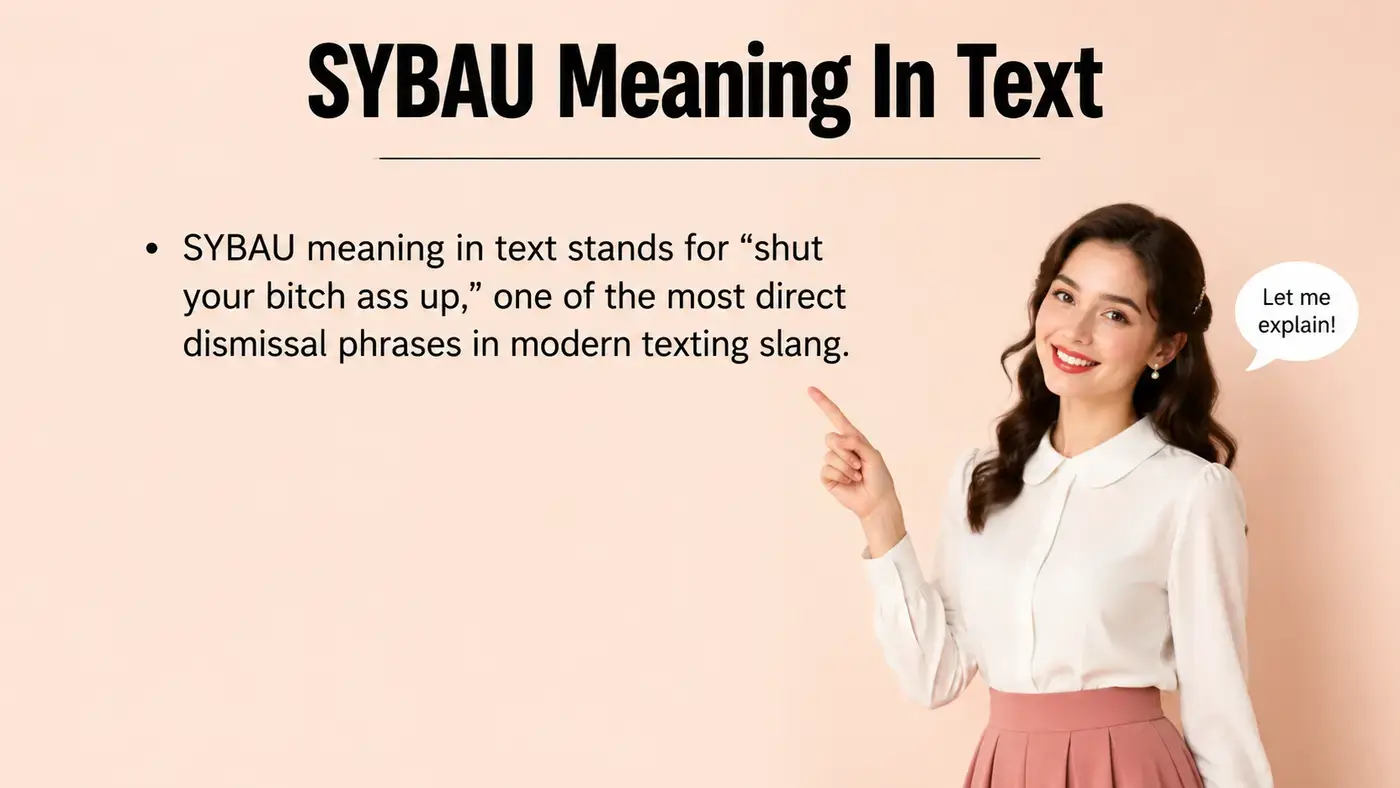
SYBAU meaning in text stands for “shut your bitch ass up,” one of the most direct dismissal phrases in modern texting slang.
It’s not subtle. It’s not soft. When someone sends SYBAU, the conversation has hit a wall and they want you to know it immediately.
Origin and Cultural Footprints
SYBAU meaning in text grew out of the same aggressive abbreviation culture that produced STFU, SYFM, and similar expressions from early 2000s online forums and gaming chat rooms.
The full phrase existed in spoken American slang long before anyone compressed it into five letters for a text message.
By the 2010s SYBAU had circulated through Twitter arguments, gaming lobbies, and group chat drama, picking up traction specifically in spaces where blunt, unfiltered communication was the established norm.
Other All Meanings of SYBAU
SYBAU is one of the more single-purpose abbreviations in texting culture. It doesn’t fracture across communities the way shorter abbreviations do.
- SYBAU as playful banter — Between close friends who communicate in aggressive humor, SYBAU functions as an exaggerated reaction rather than a genuine command. The relationship context softens it entirely.
- SYBAU as a hard conversation ender — Used deliberately to signal that a topic, argument, or person has crossed a line and the sender has zero interest in continuing further.
Neither of these represents a different definition. They’re the same phrase operating in two completely different emotional registers depending entirely on who’s sending it and to whom.
Why Does SYBAU Have So Many Different Definitions
SYBAU doesn’t carry genuinely competing definitions the way multi-purpose abbreviations do. What it carries is a wide emotional range inside one single meaning.
The same five letters function as either a joke or a hard stop depending entirely on the relationship between the two people involved. That emotional flexibility is what makes it both widely used and frequently misread by people outside the specific relationship dynamic.
Context and relationship history decide everything here. The letters stay the same. The intent behind them can be polar opposites.
Who Uses It Most
SYBAU circulates heavily in specific communities where direct, unfiltered communication is the established norm.
| Group | How They Use It | Typical Context |
|---|---|---|
| Gen Z friend groups | Playful aggressive banter | Group chats, DMs, Snapchat |
| Gamers | Frustration and trash talk | Discord, gaming lobbies |
| Twitter/X users | Public clapback | Reply threads and quote posts |
| General texters | Hard conversation shutdown | Personal arguments via text |
Gamers and Gen Z carry SYBAU the hardest. In gaming spaces it’s almost always trash talk. In Gen Z friend groups it swings between genuine irritation and affectionate teasing depending on who’s involved.
Real Conversation Examples Using SYBAU
1. Playful banter between close friends
Two best friends texting after one keeps teasing the other about something embarrassing
A: “I’m just saying, you really wore that to the party.” B: “SYBAU you literally wore the same jacket three weeks in a row.” A: “That jacket is a classic and you know it.”
Context: Mutual roasting between people who talk like this normally. The aggression is the humor. How to reply: Fire back with equal energy. If they sent SYBAU with this tone, they’re playing, not angry.
2. Genuine shutdown during an argument
Two people in a heated text exchange that has gone on too long
A: “I’m just trying to explain my side of things one more time.” B: “SYBAU, I’m done with this conversation.” A: “Okay. I’ll give you space.”
Context: A real, firm conversation ender. No humor attached. The person has genuinely hit their limit. How to reply: Respect the signal immediately. Pushing further after a hard SYBAU makes everything worse.
3. Twitter reply during a public argument
Responding to someone repeatedly making the same bad-faith point in a thread
A: “You clearly don’t understand the basic premise of what I said.” B: “SYBAU with the condescending responses, nobody asked for the lecture.”
Context: Public clapback against someone being dismissive or condescending in a visible thread. How to reply: Either disengage entirely or respond with a calm, factual counter. Escalating matches their energy and rarely helps.
Usage of SYBAU in Different Contexts
In personal texting between close friends, SYBAU works as an extreme reaction that signals someone pushed a joke too far or repeated themselves one too many times. It draws a line without necessarily ending the friendship or the conversation.
“SYBAU you’ve told that story four times this week” lands as exasperation wrapped in humor rather than genuine anger between people who know each other well.
In public social media spaces SYBAU sharpens into a direct, unambiguous clapback. Dropping it in a Twitter reply thread tells the other person and everyone watching that you’re done being civil and the conversation has moved into different territory entirely.
How Gen Z Uses SYBAU Today
Gen Z deploys SYBAU with a level of tonal precision that older audiences often miss entirely. In tight friend groups it functions almost as punctuation, a dramatic exclamation point at the end of a roast session that signals the joke landed and the person is done taking hits.
That dual function, real anger and affectionate aggression, is a very specific Gen Z communication signature. They’ve built entire friendship languages around aggressive-sounding phrases that carry warmth underneath when the relationship context supports it.
In public spaces the warmth disappears completely. SYBAU in a comment section or public reply is exactly what it reads as: a hard, direct dismissal with no softening layer attached.
Does SYBAU Mean the Same as STFU
This is the most common comparison people search for when they encounter SYBAU, and it’s worth addressing directly. STFU means “shut the fuck up” and SYBAU means “shut your bitch ass up“
They’re close in function but SYBAU carries significantly more aggression and personal targeting. STFU has been so widely used it’s almost lost its edge. SYBAU still lands harder because it’s more specific, more loaded, and far less common in everyday use.
If someone chose SYBAU over STFU, that choice was deliberate. The escalation in intensity is the point.
Meaning Across Social Media
| Platform | SYBAU Meaning | How It’s Used |
|---|---|---|
| iMessage / SMS | Shut your bch a up | Personal arguments and friend banter |
| Twitter/X | Hard public clapback | Reply threads and quote tweet responses |
| Discord | Trash talk and frustration | Gaming lobbies and server drama |
| TikTok | Reaction to bad takes | Comment section responses |
| Snapchat | Friend group teasing | Group chats and direct snaps |
| Blunt thread dismissal | Heated debate replies |
Twitter is where SYBAU carries the most public weight and the most genuine aggression. Discord is where it lives most comfortably as normalized trash talk between people who have an established dynamic.
Common Confusions and Wrong Interpretations
SYBAU creates specific misreads that are worth addressing before they cause real problems in actual conversations.
- SYBAU vs. STFU — Near-synonyms but SYBAU is more personal, more loaded, and significantly more aggressive. Choosing SYBAU over STFU signals a deliberate escalation.
- SYBAU as always hostile — Between close friends who communicate this way regularly, SYBAU is often playful. The surrounding conversation tone tells you which version you’re receiving.
- SYBAU vs. BYE — BYE as a standalone message signals a clean exit. SYBAU signals an exit with friction attached. They both end conversations but in completely different emotional registers.
Related Slang Terms
- STFU — Shut the f**k up (near-synonym, slightly less aggressive)
- SYFM — Shut your f**king mouth (similar energy, different construction)
- BYE — Clean conversation exit, no aggression required
- IDC — I don’t care (dismissal without the heat)
- NVM — Never mind (softer version of ending a thread)
- GTFO — Get the f**k out (full dismissal signal)
- ISTG — I swear to God (frustration intensifier often used before SYBAU)
- FR — For real (sincerity signal, sometimes follows SYBAU to confirm seriousness)
How to Reply When Someone Says SYBAU
If SYBAU came from a close friend in a banter context, match the energy and fire back. They’re playing and they expect you to play back. A tame or serious reply to a playful SYBAU kills the momentum of the exchange entirely.
Read the tone they set and stay in that register.
If SYBAU came from a place of genuine frustration or anger, the only right move is space. Don’t send a follow-up message immediately, don’t try to explain yourself again, and don’t match the aggression. They’ve told you they’re done and honoring that is the most productive response available.
Conclusion
SYBAU meaning in text is one of the clearest emotional signals in modern messaging. It means stop, back off, and it means it right now.
Read the relationship, read the tone, and you’ll always know exactly how to take it.
FAQs
SYBAU stands for shut your bitch ass up. It is used as rude or sarcastic internet slang in chats and memes.
On TikTok, SYBAU appears in comments, jokes, and reaction videos. It is usually used playfully, but it can sound offensive.
SYAU is not a common texting abbreviation with a fixed meaning. Its definition depends on the chat or online community.
People use SYBAU in casual online conversations or meme reactions. It is mostly used jokingly between friends on social media.
Syabu is a slang term for methamphetamine in some countries. It refers to an illegal stimulant drug.

GenZ Slang Writer & Internet Culture Expert Layla Brooks has spent 2+ years tracking how GenZ slang evolves across TikTok, Twitter, and everyday conversations. From decoding viral phrases to explaining what words actually mean in real life, Layla writes content that feels native to the culture, not forced. If a word is trending, Layla already knows what it means and why it matters.