Moneypenny Meaning In Movies: Usage And Examples
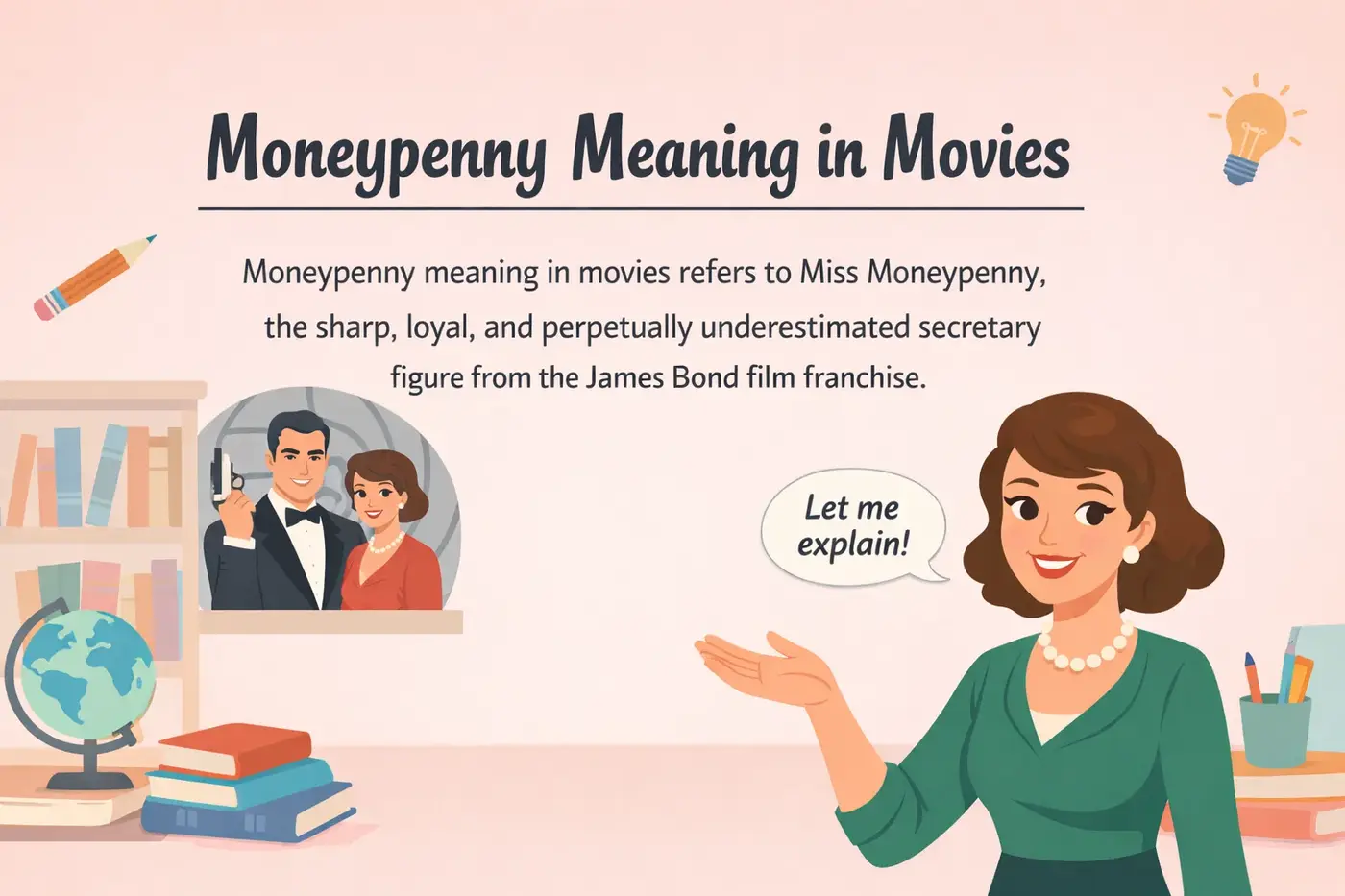
Moneypenny meaning in movies refers to Miss Moneypenny, the sharp, loyal, and perpetually underestimated secretary figure from the James Bond film franchise — a character who became so iconic that her name turned into a cultural shorthand for a specific kind of professional dynamic. She first appeared in the 1962 film Dr. No and never really left.
The name carries weight beyond the films themselves. Say “Moneypenny” to most people and they immediately picture someone brilliant doing work that gets credited to someone else — witty, capable, and perpetually one step ahead of the person they support. That’s the legacy. That’s what the name means.
Origin and Cultural Footprints
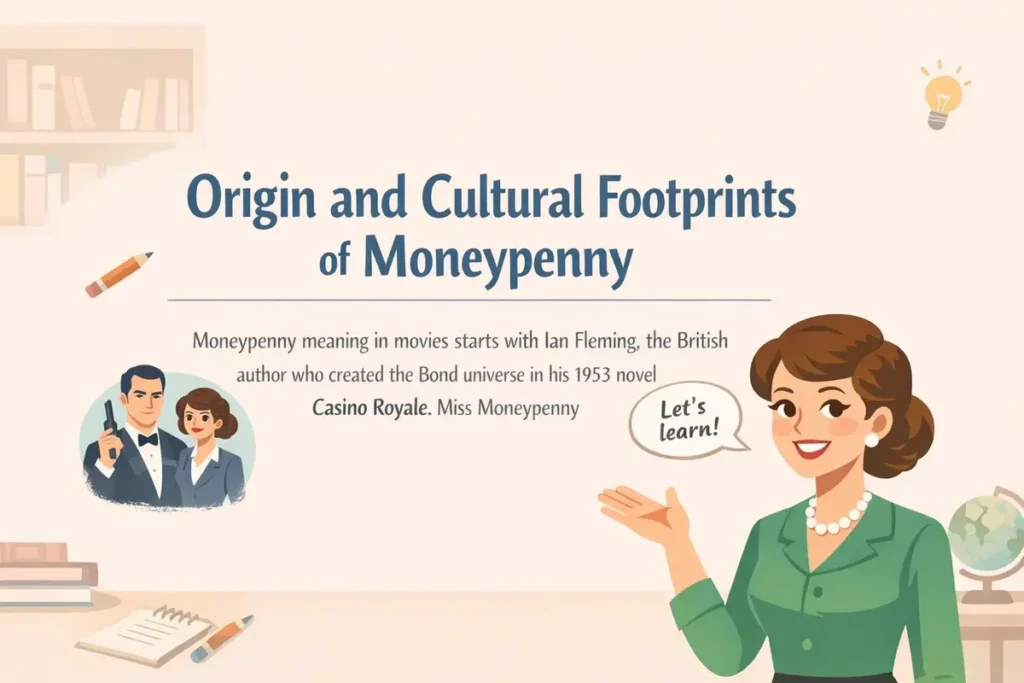
Moneypenny meaning in movies starts with Ian Fleming, the British author who created the Bond universe in his 1953 novel Casino Royale. Miss Moneypenny — full name never officially confirmed in the original canon — was M’s secretary at MI6, and she appeared as a recurring figure of warmth, intelligence, and unrequited tension with Bond across decades of films.
What makes the cultural footprint remarkable is how the character’s role evolved without anyone formally announcing it. In early Bond films, she was largely a figure of charm and comedic flirtation. By the time Naomie Harris reimagined the role in Skyfall (2012) and Spectre (2015), Moneypenny had become a field agent turned intelligence officer — capable, strategic, and nobody’s sidekick. The name traveled with that evolution, picking up new meaning at every turn.
Other Definitions of Moneypenny
Outside of film, “Moneypenny” has become a colloquial term for any exceptionally capable support professional whose contributions go quietly unrecognized. It gets used in offices, journalism, and corporate culture to describe the person who holds an entire operation together while someone else takes the credit. It’s not always a compliment — sometimes it’s a quiet observation with a sharp edge.
The name has also been adopted commercially. There’s a well-known UK-based telephone answering and outsourcing company called Moneypenny, founded in 2000, that leans directly into the association — professional, reliable, quietly indispensable. The brand choice wasn’t accidental. It trades on exactly the kind of image the Bond character built over sixty years: efficient, personable, and always there when it matters.
Who Uses It Most?
The term lands differently depending on who’s using it. Film critics and pop culture writers reach for it when analyzing workplace dynamics in cinema or discussing how the Bond franchise handled female characters across different eras. It’s a reference point with enough weight to carry an argument on its own.
Here’s a clear look at which groups use the Moneypenny reference most and why it resonates with each:
| Group | How They Use “Moneypenny” | Why It Resonates |
|---|---|---|
| Film critics & journalists | Character analysis and Bond franchise retrospectives | Decades of cultural buildup make it a precise shorthand |
| Feminists & cultural commentators | Critiquing undervalued professional women in media | The character embodies a recognized workplace archetype |
| Gen Z pop culture fans | Referencing Skyfall-era Moneypenny on Tik-Tok and Twitter | Naomie Harris modernized the role for a new generation |
| Corporate professionals | Describing capable-but-overlooked colleagues | The metaphor maps directly onto real workplace dynamics |
| Fiction & screenwriting communities | Discussing supporting character archetypes | Moneypenny is a masterclass in doing more with less screen time |
| Trivia and film buffs | Bond franchise discussions, ranking supporting characters | She appears in more Bond films than almost any other character |
Moneypenny Meaning in Different Contexts
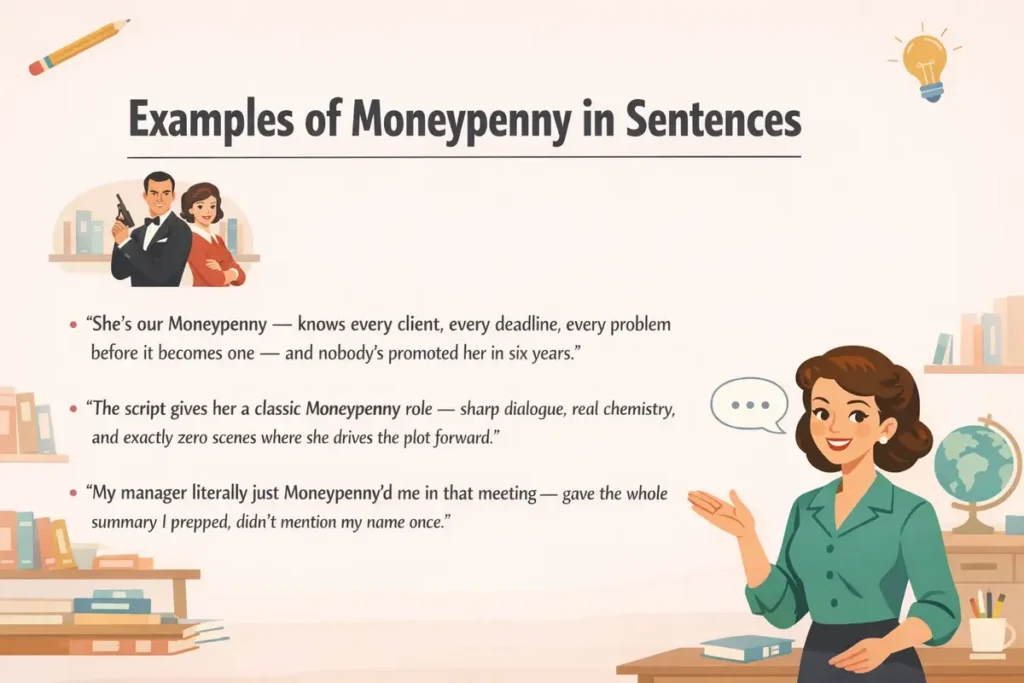
In workplace and professional discourse, Moneypenny gets used as a noun — both descriptively and critically. When someone calls a colleague “the Moneypenny of the office,” they’re usually pointing to someone who quietly runs everything while leadership takes the bow. “She’s our Moneypenny — knows every client, every deadline, every problem before it becomes one — and nobody’s promoted her in six years.” That sentence says everything without needing to explain itself.
In film and media criticism, the name functions as a benchmark for a specific character archetype: the brilliant supporting figure constrained by the genre’s habits rather than by any lack of ability. “The script gives her a classic Moneypenny role — sharp dialogue, real chemistry, and exactly zero scenes where she drives the plot forward.” It’s shorthand that film-literate readers understand instantly, which is exactly why critics keep reaching for it.
How Gen Z Uses Moneypenny Today
Gen Z didn’t grow up with the Roger Moore-era Moneypenny. Their reference point is Naomie Harris — field agent, firearms trainer, someone who chose the desk rather than being confined to it. That distinction matters. For younger audiences, Moneypenny isn’t a symbol of being overlooked — she’s a symbol of strategic positioning. She knows exactly where she is and why.
The irony layer comes in when Gen Z repurposes the name online to call out workplace dynamics they find absurd. “My manager literally just Moneypenny’d me in that meeting — gave the whole summary I prepped, didn’t mention my name once” is exactly the kind of sentence that gets fifteen hundred likes on a work-rant Tik-Tok. The moneypenny meaning in movies gives the reference enough context that it lands without explanation. One word does the whole job.
Does Moneypenny Mean Just a Secretary?
This is the most reductive interpretation — and it’s worth pushing back on directly. Calling Moneypenny “just a secretary” misses everything that made the character stick across sixty years of cinema. Even in the early films, she consistently outpaced the genre’s expectations for that role: sharper than the scene required, warmer than Bond deserved, and always more aware of what was actually happening than anyone gave her credit for.
The modern reimagining made the subtext explicit. Naomie Harris’s version isn’t a secretary who happens to be clever — she’s a trained field operative who chose intelligence work over fieldwork. That reframing didn’t reinvent the character so much as it confirmed what thoughtful viewers had been reading into her for years. Reducing Moneypenny to a job title is like summarizing Skyfall as “a film about a boat.” Technically accurate. Completely wrong.
Meaning Across Social Media
| Platform | Moneypenny Reference | How It’s Used |
|---|---|---|
| Twitter / X | Workplace archetype commentary | Calling out undervalued colleagues or self-deprecating professional humor |
| TikTok | Bond character breakdowns, feminist film analysis | Short-form video essays on Moneypenny’s evolution across eras |
| Film discussion threads, r/JamesBond, r/TrueFilm | Debating which actress defined the role, ranking Bond supporting characters | |
| Professional metaphor in workplace culture posts | Used to highlight overlooked contributors in corporate environments | |
| Throwback Bond film content, character aesthetic posts | Naomie Harris and early film stills shared in pop culture accounts | |
| Tumblr | Character study deep-dives, Bond fandom | Long-form analysis posts on Moneypenny as a feminist film figure |
| YouTube | Bond retrospectives and character rankings | Featured in “underrated Bond characters” and franchise history videos |
Common Confusions & Wrong Interpretations
One recurring confusion is treating Moneypenny as a single, fixed character rather than a role that’s been inhabited differently by multiple actresses across decades. Lois Maxwell played her for fourteen films from 1962 to 1985. Caroline Bliss took over for two films. Samantha Bond held the role through the Brosnan era. Naomie Harris redefined it entirely. The name is consistent — the character evolved with every new interpretation. People who only know one era often talk past each other.
The second common mix-up is conflating Moneypenny with M — particularly now that both roles have been played by women at the same time in recent films. M is Bond’s direct superior, the authority figure. Moneypenny operates alongside Bond more as a peer and confidante. The professional relationship is different, the power dynamic is different, and the emotional register is different. They’re both indispensable. They’re not interchangeable.
Similar Terms, Alternatives & Related Slang
- The real MVP — informal praise for the person doing the most essential, least credited work
- Behind the scenes — broad reference to unacknowledged contributors in any field
- The right hand — someone indispensable to a leader, often with more real influence than their title suggests
- Gatekeeping role — used in organizational language to describe someone who controls access to decision-makers
- The fixer — someone who quietly resolves problems before they escalate, with or without recognition
- Office backbone — casual term for the person an organization would genuinely collapse without
- Q — the Bond franchise’s tech genius; sometimes used similarly to Moneypenny as shorthand for undervalued expertise
- Undercard — sports-borrowed term for someone whose talent exceeds the billing they receive
How to Reply When Someone Calls You a Moneypenny
If someone uses the term as a compliment — recognizing your competence, your reliability, your quiet command of a situation — take it. “Honestly? I’ll take that. She’s the one who actually knew what was going on” is a perfectly solid response that accepts the praise without underselling it. You don’t need to deflect a comparison that accurate.
If the reference feels like it’s pointing at something unfair — that you’re doing the work without getting the credit — it’s worth naming that directly. “I appreciate the Moneypenny energy, but I’d like a bit more of the field agent timeline” is clear, specific, and hard to misread. People who use cultural references to say something sideways usually respond better to someone who meets them at the same register. Precise, calm, and without drama. Moneypenny would approve.
Conclusion
Moneypenny meaning in movies is bigger than one character in one franchise. It became a cultural reference point because it maps onto something real — brilliance that operates in the background of someone else’s story. The name earned its place in the language.
She’s been in more Bond films than almost any other character. That’s not an accident. That’s recognition.
FAQs
“Moneypenny” is not common slang in real life. It mainly refers to the character Miss Moneypenny and sometimes playfully describes a loyal assistant with a sharp wit.
In the James Bond films and books, safe sex is not usually shown or discussed. The focus stays on action and storytelling rather than realistic details like that.
Bond does not actually call M’s mom in canon stories. This idea likely comes from jokes, memes, or confusion with playful internet content.
In the Bond series, Miss Moneypenny is M’s trusted secretary. She is known for her intelligence, loyalty, and subtle romantic tension with Bond.
No main Bond girl character is written as transgender in the official series. However, Caroline Cossey, a transgender model, appeared briefly in For Your Eyes Only.
Moneypenny never truly betrays Bond in the official storyline. Any scenes that seem like betrayal are usually part of missions, misunderstandings, or fan interpretations.

GenZ Slang Writer & Internet Culture Expert Layla Brooks has spent 2+ years tracking how GenZ slang evolves across TikTok, Twitter, and everyday conversations. From decoding viral phrases to explaining what words actually mean in real life, Layla writes content that feels native to the culture, not forced. If a word is trending, Layla already knows what it means and why it matters.