TYY Meaning in Text: Everything Explained 2026
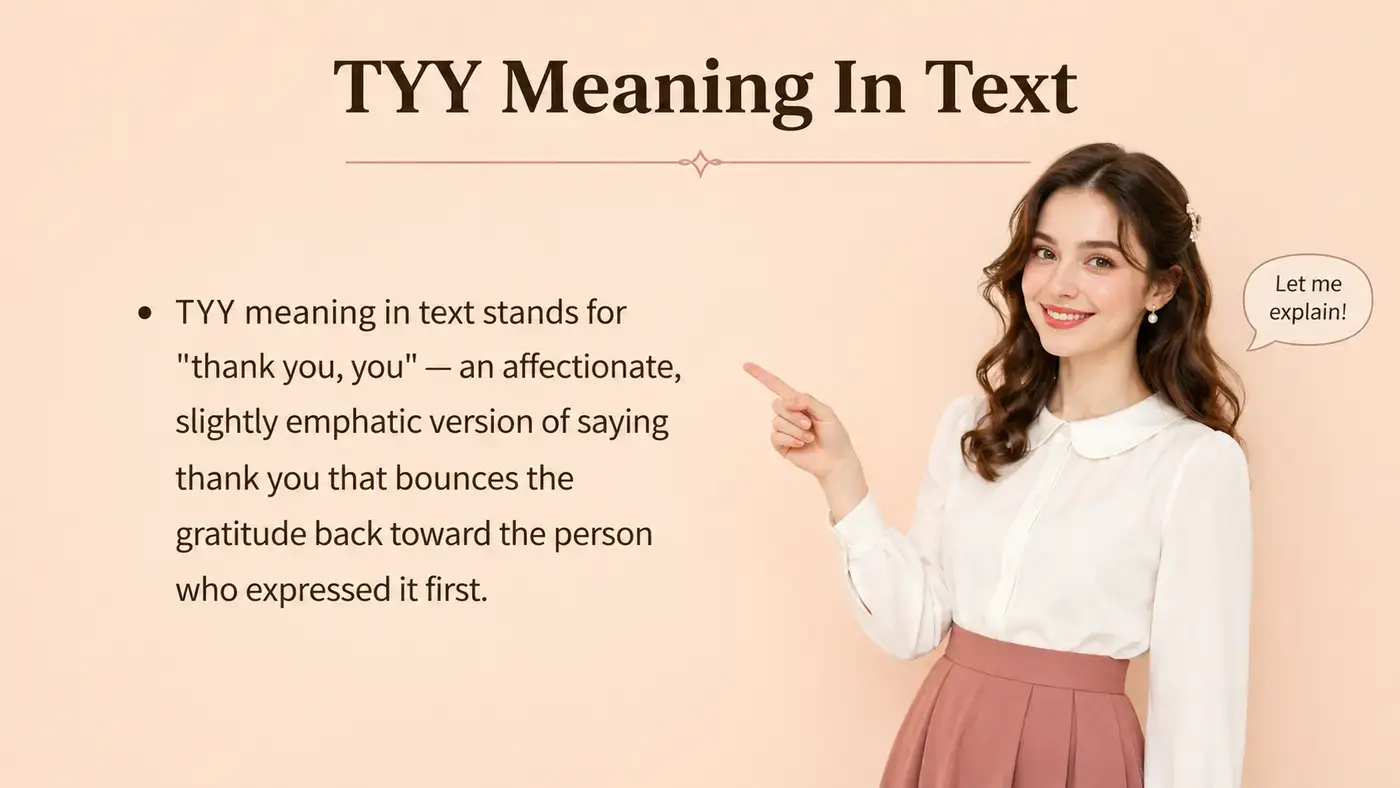
TYY meaning in text stands for “thank you, you” — an affectionate, slightly emphatic version of saying thank you that bounces the gratitude back toward the person who expressed it first.
It’s warmer than TY alone. More personal. When someone says TYY, they’re not just acknowledging thanks, they’re reflecting it directly back at the person who gave it.
Origin and Cultural Footprints
TYY meaning in text developed as a natural extension of TY, which itself became standard shorthand for “thank you” in early SMS and instant messaging culture through the late 1990s and 2000s.
As texting evolved, people started doubling letters and adding extra characters to signal increased emotional warmth rather than just basic acknowledgment.
By the time platforms like Snapchat and Instagram DMs became dominant, TYY had settled into everyday use as a way to return gratitude with a personal touch, especially in exchanges where one person thanks another and the feeling genuinely goes both ways.
Other All Meanings of TYY
TYY doesn’t carry many competing meanings across different communities, which makes it one of the more stable abbreviations in casual texting culture.
- TYY as an enthusiastic standalone thank you — Some users drop the second Y simply to add intensity to the gratitude rather than returning it. In this reading TYY just means “thank you very much” with the extra Y functioning as an emotional amplifier.
- TYY as a typo variation of TY — In fast-paced texting, some instances of TYY are simply TY typed twice or with an accidental extra letter, especially on mobile keyboards. Context usually makes the intent clear quickly.
Neither of these alternate readings changes the overall warmth of the message. TYY in any form signals genuine positive feeling, which is exactly why it works across different interpretations without causing confusion.
Why Does TYY Have So Many Different Definitions
The extra Y is doing interpretive work that different people read differently. Some see it as “you” bounced back. Others read it as emphasis added to a simple thank you. Both readings land warmly, so the ambiguity never creates real friction.
Short gratitude expressions almost always attract multiple readings because tone carries the meaning more than the letters do. TYY benefits from that because no matter how you read the second Y, the feeling behind it is unmistakably positive and warm.
Who Uses It Most
TYY circulates across a wide range of people, though certain groups have made it part of their regular communication rhythm.
| Group | How They Use It | Typical Context |
|---|---|---|
| Gen Z | Warm personal exchanges | DMs, texts, Snapchat replies |
| Millennials | Affectionate gratitude return | Personal texts and group chats |
| Content creators | Audience acknowledgment | Comment replies and DM responses |
| Close friends and couples | Mutual appreciation signal | Daily texting and casual exchanges |
Couples and close friends use TYY the most naturally and frequently. It fits perfectly in exchanges where one person expresses care and the other wants to reflect that same energy directly back without writing a paragraph.
Real Conversation Examples Using TYY
1. Returning gratitude between close friends
Two friends texting after one covered for the other at work
A: “Seriously, thank you for doing that today. You saved me.” B: “TYY honestly, you’ve done the same for me more times than I can count.” A: “That’s what we’re here for.”
Context: Mutual gratitude exchange between people with a genuine history of showing up for each other. How to reply: Acknowledge the warmth and keep it moving. This kind of exchange doesn’t need to be prolonged, it just needs to land.
2. Romantic partner exchange during a normal day
Two people in a relationship texting mid-afternoon
A: “Just wanted to say I appreciate you, you’ve been really patient with me lately.” B: “TYY for even noticing and saying something. That actually means a lot.” A: “Always.”
Context: Soft, genuine appreciation exchange in a healthy relationship. TYY here returns the acknowledgment with added personal warmth. How to reply: Keep the same gentle energy. This isn’t the moment for humor or deflection. Stay in the feeling.
3. Creator responding to a fan’s kind comment
Instagram comment section under a recent post
A: “Your content genuinely makes my day better every time.” B: “TYY for saying that, comments like this keep me going for real.”
Context: Creator returning genuine appreciation to an audience member who offered real encouragement. How to reply: The creator already closed the loop warmly. Engaging further with a simple heart or a follow-up is welcome but not required.
Usage of TYY in Different Contexts
In personal one-on-one texting, TYY lands as a small but meaningful emotional gesture. It tells the other person their gratitude was received and reflected back at them, which creates a satisfying loop in the conversation that a plain “no problem” never quite achieves.
“TYY for checking in, I really needed that today” carries twice the warmth of “thanks” while taking the same amount of time to type.
In creator and public-facing contexts, TYY signals accessibility and genuine connection. A creator who responds with TYY instead of a generic emoji or nothing at all tells their audience they actually read the message and felt something real in response to it.
How Gen Z Uses TYY Today
Gen Z treats TYY as one of their softer communication tools in a vocabulary that often leans toward blunt or ironic expression. When it appears, it signals that the moment is genuine and the person means it without any ironic distance attached.
That sincerity is actually notable in Gen Z communication because it shows up against a backdrop of heavy sarcasm and dry humor. TYY cuts through that and says this exchange is real, take it seriously.
There’s also a relational signal embedded in TYY. Using it instead of a standard TY tells the other person they specifically matter in the exchange. The “you” in TYY is doing real pointing work and Gen Z understands that precision intuitively.
Does TYY Mean the Same as TY
Most people assume TYY is just a longer version of TY with an accidental or meaningless extra letter. That reading misses what the second Y actually contributes to the message.
TY is neutral acknowledgment. TYY personalizes the gratitude and often reflects it directly back at the sender. The difference between “thank you” and “thank you, you” is the difference between accepting appreciation and genuinely sharing it back. That’s not a small distinction in a personal exchange.
If someone sent you TYY and you read it as just a typo-heavy TY, you may have missed the warmth they were specifically directing at you.
Meaning Across Social Media
| Platform | TYY Meaning | How It’s Used |
|---|---|---|
| iMessage / SMS | Thank you, you | Personal warm exchanges and replies |
| Gratitude returned to audience | Comment replies and DM responses | |
| Snapchat | Affectionate acknowledgment | Direct snaps and streak conversations |
| Twitter/X | Warm public thank you | Replies to kind mentions or quote tweets |
| TikTok | Creator to viewer appreciation | Comment section acknowledgments |
| Discord | Casual warm thanks | Server conversations and DMs |
Instagram is where TYY sees the most creator-to-audience use. iMessage and Snapchat carry the most personal, relationship-based versions of it between people who know each other well.
Common Confusions and Wrong Interpretations
TYY causes a few specific misreads that surface consistently enough to address directly.
- TYY vs. TY — TY is a basic acknowledgment. TYY adds personal warmth and often reflects the gratitude back at the sender. Reading TYY as just a typo misses the emotional layer entirely.
- TYY vs. TYSM — TYSM means “thank you so much” and amplifies the scale of the gratitude. TYY personalizes rather than amplifies. They operate on different emotional axes entirely.
- TYY as enthusiasm only — Some people read the double Y as pure enthusiasm rather than a return signal. Both readings are valid but the “thank you, you” interpretation adds a relational depth that the enthusiasm reading alone doesn’t capture.
Related Slang Terms
- TY — Thank you (basic, neutral gratitude abbreviation)
- TYSM — Thank you so much (intensified scale of thanks)
- TYA — Thank you again (acknowledges repeated help or generosity)
- TYFA — Thank you for asking (acknowledges a question specifically)
- NP — No problem (common reply to any form of thanks)
- ILY — I love you (warmer close sometimes used after a TYY exchange)
- FR — For real (sincerity signal, often follows TYY to emphasize genuineness)
- ICL — I can’t lie (honesty qualifier that sometimes pairs with TYY in vulnerable conversations)
How to Reply When Someone Says TYY
When someone sends you TYY in a genuine personal exchange, don’t brush past it with a quick emoji or a change of subject. They directed something warm specifically at you and that deserves a moment of acknowledgment before the conversation moves on.
A simple “that means a lot, genuinely” or “we both know it goes both ways” lands perfectly and honors what they put into those three letters.
If TYY came from a creator or public figure in response to something you said, a simple heart reaction or a brief warm follow-up keeps the connection alive without demanding more of their time than they offered. They gave you a real response and acknowledging it briefly closes the loop cleanly.
Conclusion
TYY meaning in text is one of the warmest small gestures in modern messaging. Three letters that say you see the other person and want them to feel it.
Use it when you mean it and it lands every single time.
FAQs
TYYY is an extended form of thank you. Extra letters are added to show stronger excitement or appreciation.
TYTY means thank you thank you. It is a friendly and enthusiastic way to express gratitude in texts.
TTY usually means talk to you. It is often used before ending a conversation casually online.
TY from a girl simply means thank you. The tone can feel warm, friendly, or appreciative depending on context.
TYY is another casual version of thank you. People use it to sound more expressive or playful in chats.

GenZ Slang Writer & Internet Culture Expert Layla Brooks has spent 2+ years tracking how GenZ slang evolves across TikTok, Twitter, and everyday conversations. From decoding viral phrases to explaining what words actually mean in real life, Layla writes content that feels native to the culture, not forced. If a word is trending, Layla already knows what it means and why it matters.