Duh Meaning in Text: GenZ Think it a Sexy Slang
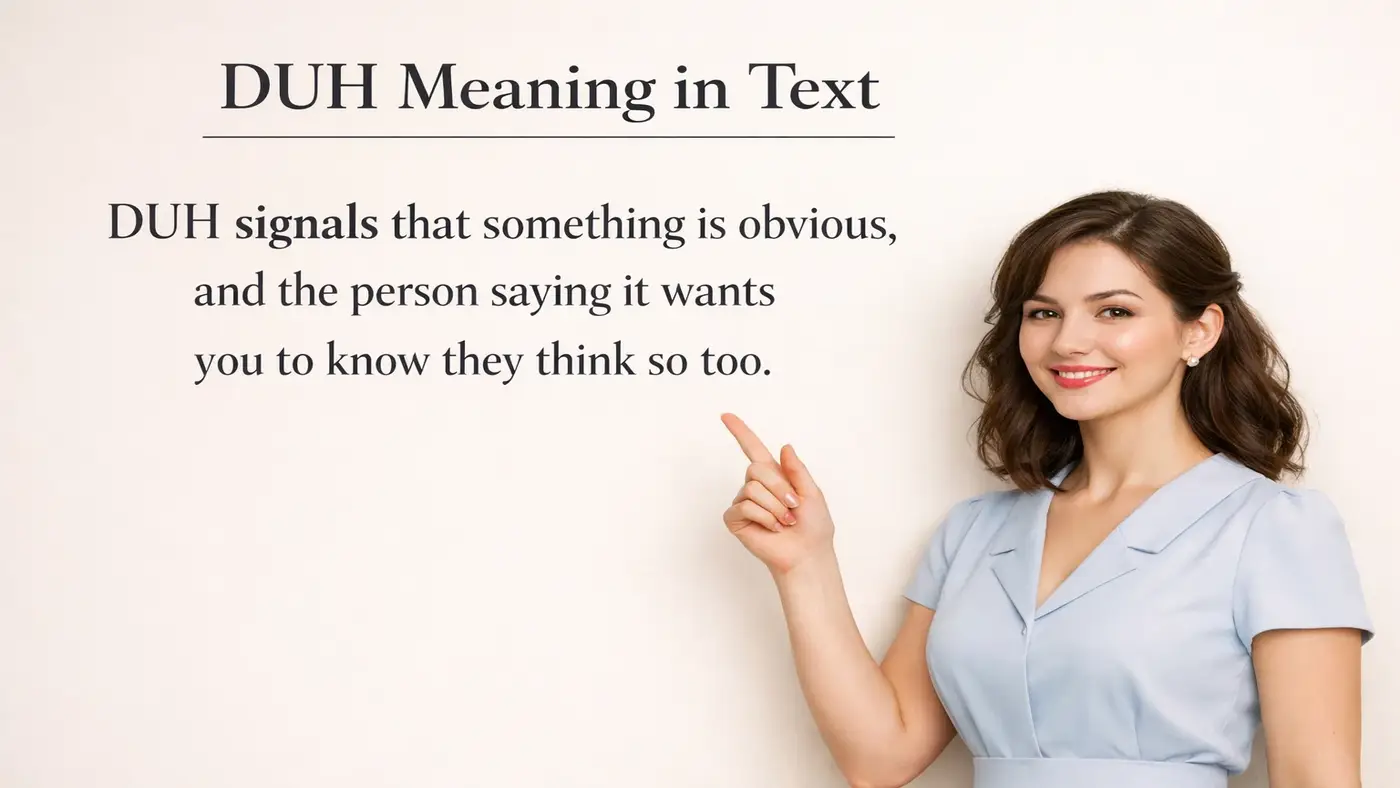
Duh meaning in text works exactly the same way it does in spoken conversation — it signals that something is obvious, and the person saying it wants you to know they think so too. It is sarcasm with a soft landing. Dismissal that keeps the tone light.
You send it when someone states something you already know, asks a question with an answer so clear it barely deserved asking, or confirms something you called weeks ago. Short, sharp, and immediately understood by everyone on the receiving end.
Origin and Cultural Footprints
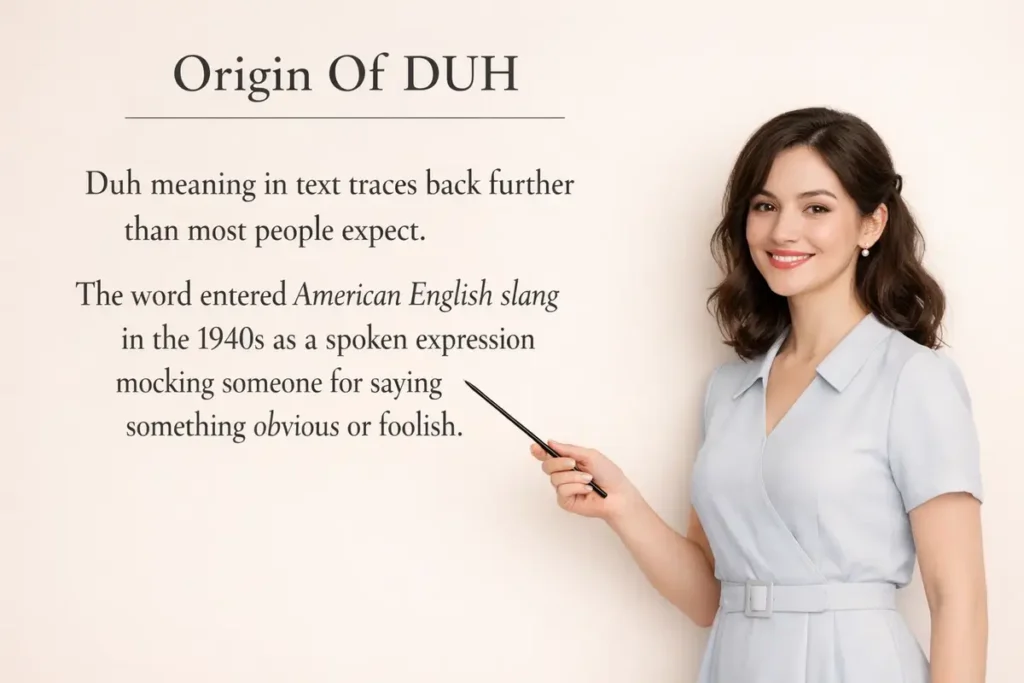
Duh meaning in text traces back further than most people expect. The word entered American English slang in the 1940s as a spoken expression mocking someone for saying something obvious or foolish. By the 1960s and 70s, cartoons, TV shows, and teenage speech had cemented it firmly in everyday language. It was never a complicated word. It never needed to be.
When internet culture exploded in the 1990s and early 2000s, duh travelled straight from spoken slang into typed conversation without any transformation. Unlike most text abbreviations, it did not need shortening or compressing. Three letters, perfectly formed, already casual enough for any chat window. It moved from AIM conversations to forum threads to Twitter replies to TikTok comments without losing a single edge of its original meaning.
Other Definitions of Duh
While the primary meaning stays consistent, duh carries a few contextual variations worth knowing:
- Expression of obviousness — The classic usage. Someone states a known fact, and “duh” signals that everyone already knew that. It points at the obvious without using more words than necessary.
- Mild self-correction — People use “duh” on themselves when they realize they missed something obvious. “Duh, I forgot my keys again” turns the word inward as a moment of self-aware frustration rather than a dig at someone else.
- Playful agreement — In close friendships, “duh” functions as enthusiastic confirmation rather than sarcasm. “Are we still going tonight?” answered with “duh!” reads as excited, warm, and obvious in the best possible way.
Who Uses It Most?
Duh crosses age groups more than most slang terms because it predates internet culture entirely. Teenagers use it. Adults use it. Gen Z uses it with ironic awareness. Millennials use it the way they always have. The word carries zero learning curve, which makes it accessible to everyone.
Here is a breakdown of which groups reach for it most and what it signals in each context:
| Group | How They Use Duh | Why It Works |
|---|---|---|
| Teenagers | Reacting to obvious statements from friends or family | Fast, familiar, and requires zero explanation |
| Gen Z | Ironic confirmation, self-correction, sarcastic agreement | Flexible enough to carry warmth or shade depending on tone |
| Millennials | Nostalgic sarcasm in group chats and social media replies | Feels natural because they grew up saying it out loud |
| Content creators | Comment replies and caption reactions to viewer questions | Signals authenticity and keeps the register casual |
| Gamers | Reacting to obvious game decisions or strategy suggestions | Low-effort dismissal that keeps the chat moving |
| Close friend groups | Any platform where sarcasm reads as affection | Shared tone makes the word land exactly as intended |
Usage of Duh in Different Contexts
In personal texting between close friends, duh works as both a punchline and a warm confirmation depending entirely on the question it answers. When someone asks something they clearly should already know the answer to, a single “duh” closes the exchange with just enough edge to be funny without causing any actual friction. It keeps things light and moves the conversation forward.
In social media comments and replies, duh gets dropped under posts where the creator states something the audience considers completely self-evident. Someone shares a hot take that turns out to be the most obvious observation imaginable, and the top comment is simply “duh.” That single word carries the entire audience’s reaction. No paragraph needed.
How Gen Z Uses Duh Today
Gen Z inherited duh from older generations and immediately started layering irony onto it. The straightforward sarcastic use still exists, but Gen Z also deploys duh as a performance of obviousness — leaning into how antiquated the word sounds to make the point funnier. Saying “well duh” in 2024 with full awareness that it sounds like a 1990s sitcom is part of the joke.
There is also a warmth register that Gen Z activates with duh that older generations use less deliberately. “Are you coming to the party?” answered with “duh, obviously” from a close friend reads as enthusiastic and affectionate. The word signals closeness as much as it signals obviousness. That dual function — sarcasm tool and warmth signal depending on the relationship — keeps duh relevant across completely different kinds of conversations.
Does Duh Mean Stu-pid?
This is the most common misread of the word, and it creates real friction when it lands wrong. Duh does not call someone stu-pid. It calls a statement obvious. The target is the observation, not the intelligence of the person making it. That distinction matters because the two interpretations produce very different emotional responses from whoever receives the word.
When someone says “duh” after a statement, they are reacting to what got said, not delivering a verdict on the person who said it. Sensitive or unfamiliar recipients sometimes read it as a personal attack when the sender meant nothing beyond light sarcasm. Reading the relationship and the surrounding context tells you which register the word landed in. Used between close friends, duh rarely causes genuine offense. Used with someone who does not know you well, it needs more care.
Meaning Across Social Media
| Platform | Duh Meaning | How It’s Used |
|---|---|---|
| Twitter / X | Obviously / sarcastic agreement | Replying to takes the audience finds self-evident or painfully obvious |
| TikTok Comments | Obviously / warm confirmation | Reacting to relatable content or answering obvious questions from creators |
| Obviously / playful sarcasm | Comment reactions to captions and stories stating the obvious | |
| Snapchat | Obviously / enthusiastic yes | Quick reply in streaks and DMs to straightforward questions |
| Obviously / self-correction | Personal and group chat sarcasm between familiar contacts | |
| Discord | Obviously / sarcastic agreement | Server chats where someone states something the group already knows |
| Obviously | Comment thread reactions to posts or questions with self-evident answers |
Common Confusions & Wrong Interpretations
- Duh read as aggressive when tone is light — In text form, duh loses the vocal softness that makes it playful in speech. Someone who reads it cold, without knowing the sender’s usual communication style, can interpret it as dismissive or rude when the sender intended it as a joke.
- Duh as self-deprecation gets misread as complaint — When someone uses duh on themselves (“duh, I forgot again”), recipients occasionally read it as venting or frustration rather than light self-mockery. The tone of the surrounding message usually clarifies which one it is.
- Platform register mismatch — Duh fits perfectly in casual texting, social media replies, and close-contact group chats. Sending it in a professional Slack thread, a client email, or any formal exchange makes the response read as dismissive and out of place. Context always governs whether it belongs.
Similar Terms, Alternatives & Related Slang
- Obviously — The full written-out version of the same sentiment; more formal in register than duh
- No kidding — Sarcastic agreement that something is obvious; slightly more verbose than duh
- Clearly — Single-word confirmation of the obvious; cooler in tone and less playful than duh
- No brainer — Describes something so obvious it requires no thought; more descriptive than reactive
- Well yeah — Casual confirmation that lands in the same register as duh without the edge
- Obvi — Gen Z shorthand for “obviously”; closest modern cousin to duh in everyday texting
- As if — Dismissal with a sarcastic edge; shares duh’s energy but leans more toward refusal
- Tell me something I don’t know — Extended version of the same reaction; carries more verbal weight than a single duh
How to Reply When Someone Says Duh
If someone sends you duh after something you said and the tone reads as playful, match the energy and move on. A quick “okay fair” or “yeah yeah I know” keeps things light and signals that you took the sarcasm the way they intended it. Turning a casual duh into a big moment almost always makes the exchange more awkward than the word itself ever intended.
If the duh felt pointed or the relationship does not carry enough familiarity to make it land as a joke, address it directly and without drama. “Did that come across as obvious? I genuinely wasn’t sure” reframes the exchange and gives the other person a chance to clarify their intent. Most people who send duh do not want a confrontation. They want a laugh. Giving them an easy out usually resolves it faster than pushing back.
Conclusion
Duh meaning in text carries the same energy it always has — obvious, immediate, and impossible to misread when the context does its job. It crossed from spoken slang to typed conversation without changing a single thing about itself. That kind of staying power belongs to very few words.
One syllable. Decades of use. Still landing clean.
FAQs
Duh means something is obvious or already known.
People use duh to point out something obvious or to tease.
It usually means she thinks the answer is obvious, sometimes playful or sarcastic.
Duh is a casual way to say clearly or obviously.
Common alternatives are obviously, clearly, and no kidding.

GenZ Slang Writer & Internet Culture Expert Layla Brooks has spent 2+ years tracking how GenZ slang evolves across TikTok, Twitter, and everyday conversations. From decoding viral phrases to explaining what words actually mean in real life, Layla writes content that feels native to the culture, not forced. If a word is trending, Layla already knows what it means and why it matters.