GNG Meaning in Text: Origin, Who Uses It, and How to Reply
GNG meaning in text stands for “Going” a shortened, vowel-dropped version of the word that people send to signal they are leaving, heading out, or wrapping up a conversation without making a production of it. Fast, direct, and completely clear.
You will see it at the end of conversations, in response to plans, or when someone needs to exit a group chat quickly. One word compressed to three letters. The whole message is in the motion.
Origin and Cultural Footprints
GNG meaning in text follows the same vowel-dropping compression pattern that gave the internet nvr, msg, and txt, shortcuts born from a culture that valued speed above everything else. “Going” lost its vowels the same way most common words did during the SMS era when character limits made every letter count.
The abbreviation stuck around because it solved a specific conversational need. Sometimes you do not need a long goodbye. Sometimes you just need to signal motion. GNG does exactly that and nothing more, which is precisely why it survived every platform shift from SMS to Snapchat to Discord without losing relevance.
Other Definitions of GNG
Outside of its primary “going” usage, GNG carries a few alternate meanings worth knowing:
- Gang: In hip-hop culture, urban communities, and certain online spaces, GNG functions as phonetic shorthand for “gang,” referring to a close crew, friend group, or community of people with shared identity. This meaning travels heavily through rap lyrics, social media captions, and community-specific communication.
- Good Night Gang: A warm group farewell used at the end of late-night conversations in Discord servers, group chats, or online communities where multiple people are present. Combines the GN sign-off with an inclusive group address in three letters.
- Going Not Going: An occasional humorous usage in event planning contexts where someone signals indecision about attendance. Rare, self-aware, and usually accompanied by enough context that the joke lands without explanation.
Who Uses It Most?
GNG belongs to people who move fast in conversations and want their exits to match that pace. The groups that reach for it most tend to be those whose communication style prioritizes efficiency and directness above formality.
Here is a clear breakdown of which groups use GNG most and how each one deploys it:
| Group | How They Use GNG | Why It Works |
|---|---|---|
| Teenagers | Exiting group chats and personal conversations quickly | Fast, low-effort, and requires zero explanation |
| Gen Z | Signaling departure in active DM threads | Fits their compressed, high-speed communication style |
| Gamers | Leaving Discord servers or mid-session sign-offs | Clean exit signal that respects everyone’s time |
| Hip-hop and urban culture communities | Referring to their crew or friend group | The “gang” reading travels naturally in these spaces |
Usage of GNG in Different Contexts
In personal texting, GNG works as a clean, low-effort exit that tells the other person the conversation is wrapping without making it feel abrupt or rude. Sending “gng, talk later” after a long exchange acknowledges the other person while signaling the end of the session naturally. It reads as considerate rather than cold.
In group chat coordination, GNG signals individual departure from an active thread. One person drops “gng, lmk what you decide” and the group understands they are stepping away but want to stay in the loop. That combination of exit and continued interest keeps the relationship warm even when the person physically cannot stay in the conversation.
How Gen Z Uses GNG Today
Gen Z uses GNG as part of a broader vocabulary of motion signals that communicate availability and presence without requiring full sentences. Knowing when someone is gng, brb, or afk tells the group exactly where that person stands without anyone needing to ask. GNG slots into that vocabulary as the permanent departure signal rather than a temporary one.
The gng meaning in text also picks up a casual confidence in Gen Z usage where signaling you are leaving without over-explaining it reads as socially assured. Nobody who is truly comfortable in a conversation feels the need to write a paragraph about why they are going. GNG says it all and the brevity itself carries a certain unbothered energy that lands well.
Does GNG Mean “Gang”?
Yes, in specific cultural and community contexts it genuinely does. Hip-hop culture, certain online communities, and social media spaces where “gang” functions as an identity marker all use GNG as a natural compression of the word. Someone captioning a group photo with “gng” is not signaling departure, they are labeling their people.
The practical separation is simple. GNG appearing at the end of a conversation means going. GNG appearing in a caption, a shoutout, or alongside references to a crew means gang. Both readings are real and both are used regularly. Context removes the ambiguity every single time without requiring any guesswork.
Meaning Across Social Media
| Platform | GNG Meaning | How It’s Used |
|---|---|---|
| Snapchat | Going | Quick DM exit signal before leaving a conversation |
| Discord | Going or Good Night Gang | Personal DM departures and late-night server sign-offs |
| Going or Gang | Story captions and DM exits; gang meaning in crew-related posts | |
| Twitter / X | Going or Gang | Conversation exits in replies and DMs; gang in community identity posts |
| Going | Personal and group chat departure signal | |
| TikTok | Gang | Community identity in comments and creator captions |
Common Confusions & Wrong Interpretations
- GNG confused with GN: GN means Good Night and signals the end of an evening conversation. GNG means Going and signals departure at any time of day. Treating them as interchangeable produces the wrong read on when someone is leaving and why.
- Gang versus Going in neutral contexts: When GNG appears without clear cultural or community context, some people assign the gang meaning when the sender meant going, or vice versa. Looking at the full message rather than the abbreviation alone resolves this immediately.
- GNG read as a typo: Some people receive GNG and assume the sender made a keyboard error rather than sending a recognized abbreviation. The word is intentional and the person sending it expects it to be understood as is.
- Good Night Gang confusion in timing: Receiving GNG in the middle of an afternoon conversation and reading it as “Good Night Gang” creates genuine confusion about whether the sender meant to say goodnight at an unusual hour. Time of day helps separate this reading from the others quickly.
Similar Terms, Alternatives & Related Slang
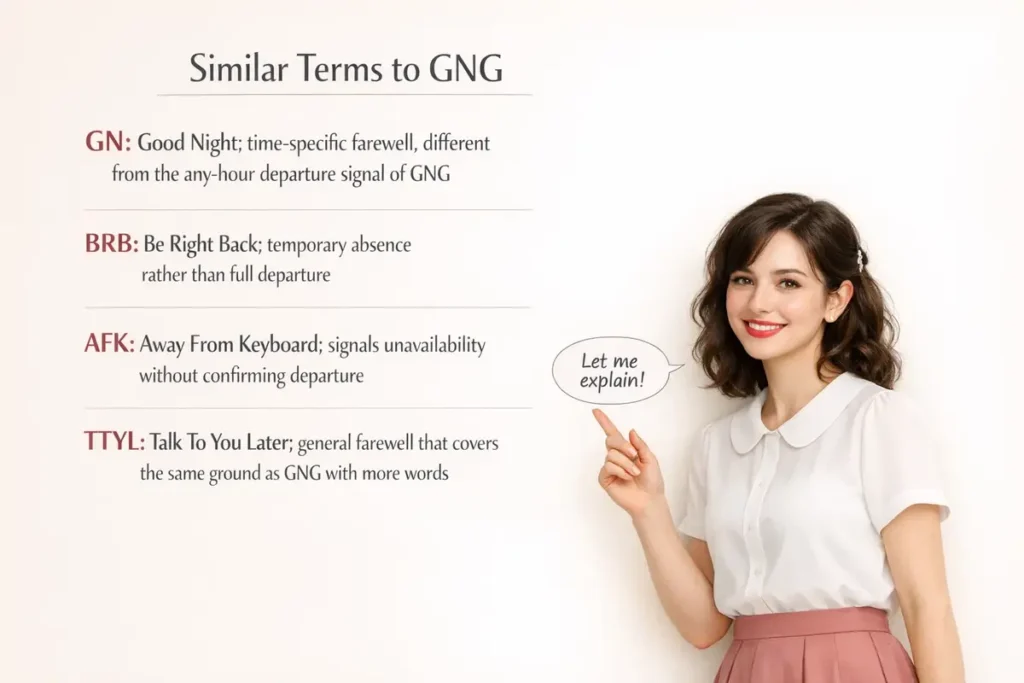
- GN: Good Night; time-specific farewell, different from the any-hour departure signal of GNG
- BRB: Be Right Back; temporary absence rather than full departure
- AFK: Away From Keyboard; signals unavailability without confirming departure
- TTYL: Talk To You Later; general farewell that covers the same ground as GNG with more words
- Dipping: Slang for leaving a situation or conversation; Gen Z alternative to GNG
- Out: Single-word departure signal; same function as GNG with even less explanation
- Peace: Casual farewell with similar brevity and energy to GNG
- Laters: Informal British-influenced goodbye that signals departure in the same register as GNG
How to Reply When Someone Sends You GNG
If someone sends GNG mid-conversation, a quick “okay, talk later” or “lmk when you are back” closes the exchange cleanly and keeps the relationship warm. Most people who send GNG are genuinely moving and want a fast acknowledgment rather than a full goodbye sequence.
If the GNG comes in a group chat and you want to keep the conversation going with the remaining people, acknowledge their departure briefly and continue. “Okay gng, anyone else still around?” keeps the group active without making the departure into a bigger moment than it needs to be. GNG is a clean exit and your response should be equally clean.
Conclusion
GNG meaning in text is a simple departure signal compressed into three letters that does its job without ceremony or explanation. It means going, it occasionally means gang, and context handles the difference every time. Short, direct, and exactly what it needs to be.
Three letters that say one clear thing. That is all GNG ever needed to do.
FAQs
GNG means “Going” — a quick way to say you are leaving or heading out. It also means “Gang” in hip-hop and urban culture communities.
On Snapchat, GNG means “Going” and people use it to exit a conversation fast without a long goodbye.
On Instagram, GNG usually means “Gang” in captions referring to a close crew, or “Going” in DMs when someone is wrapping up a conversation.
No, GNG is not a bad word. It simply means “Going” or “Gang” depending on context, and neither reading carries anything offensive.
If they mean “Going,” a quick “okay talk later” works perfectly. If they mean “Gang” in a caption or post, no reply is even needed.

GenZ Slang Writer & Internet Culture Expert Layla Brooks has spent 2+ years tracking how GenZ slang evolves across TikTok, Twitter, and everyday conversations. From decoding viral phrases to explaining what words actually mean in real life, Layla writes content that feels native to the culture, not forced. If a word is trending, Layla already knows what it means and why it matters.