GPI Meaning in Text: Origin, Confusions, And Similar Terms
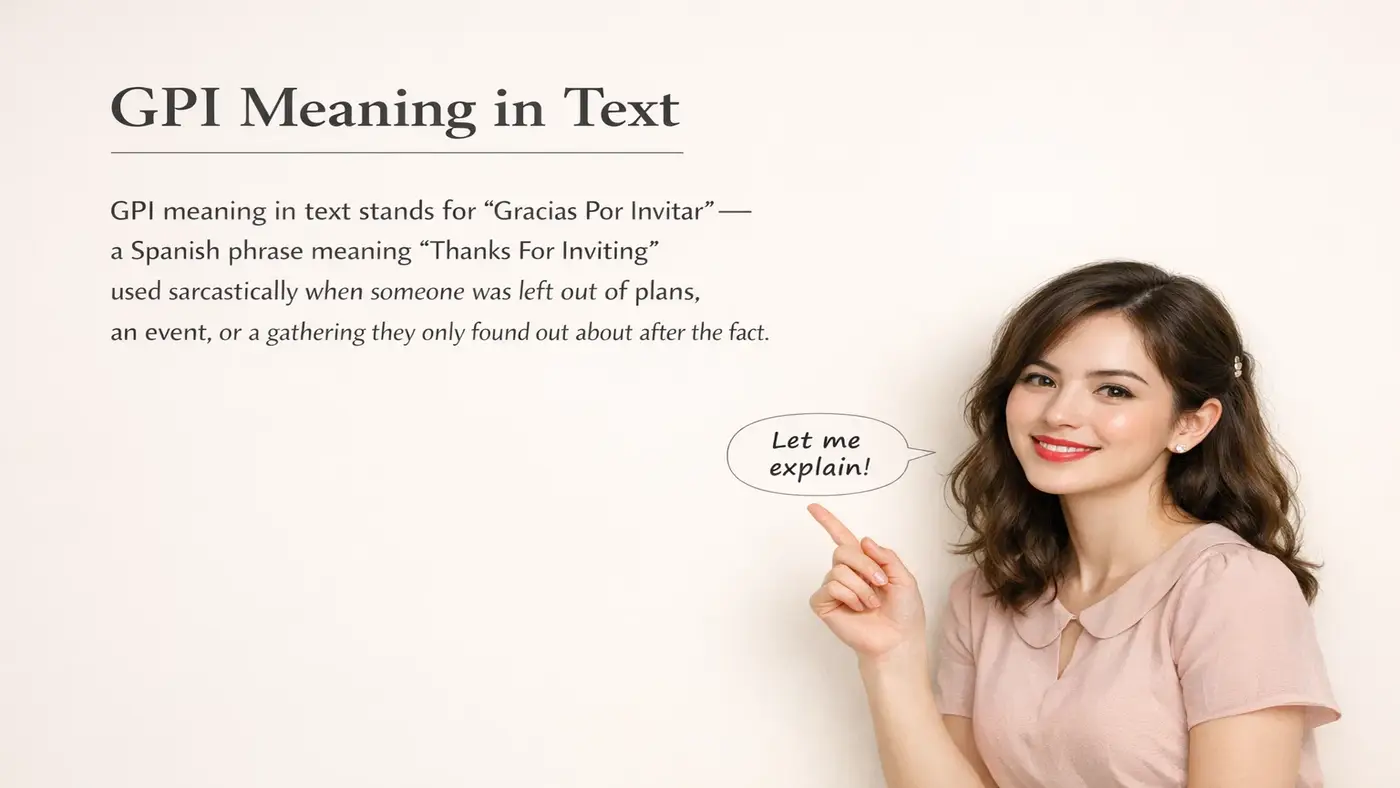
GPI meaning in text stands for “Gracias Por Invitar” — a Spanish phrase meaning “Thanks For Inviting” — and people send it sarcastically when someone leaves them out of plans, an event, or a gathering they only discovered after the fact. The Spanish origin adds an extra layer of ironic flair to what is essentially a passive-aggressive thank you.
You will see it when friends go out without someone, make plans that exclude them, or post photos from an event nobody told the sender about. Three letters. One perfectly delivered complaint wrapped in fake gratitude.
Origin of GPI
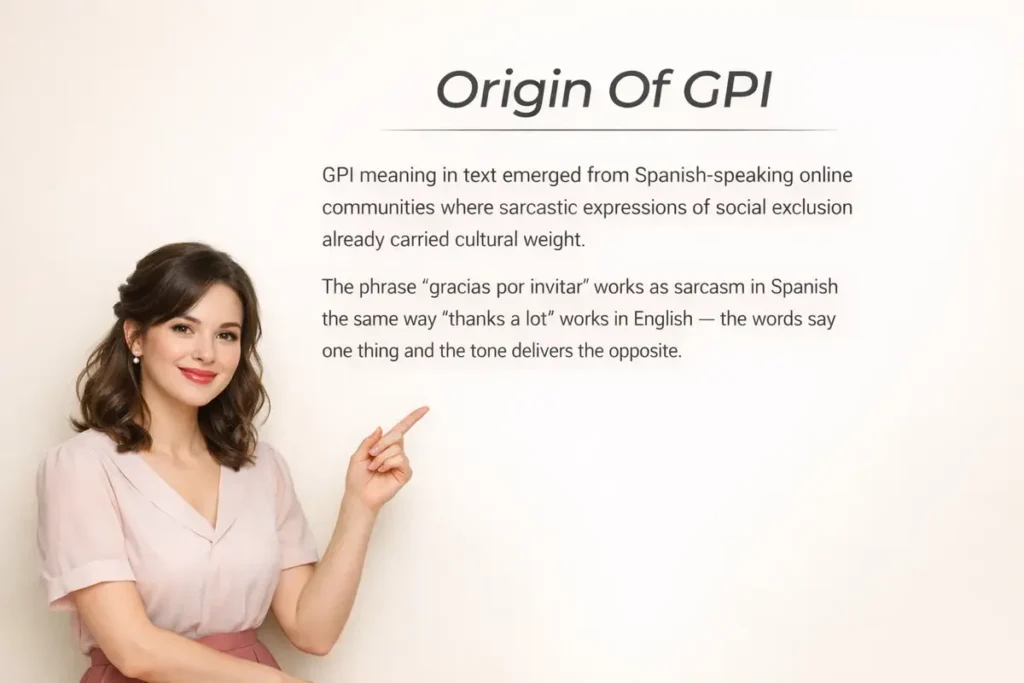
GPI meaning in text emerged from Spanish-speaking online communities where sarcastic expressions of social exclusion already carried cultural weight. The phrase “gracias por invitar” works as sarcasm in Spanish the same way “thanks a lot” works in English — the words say one thing and the tone delivers the opposite.
The abbreviation crossed into bilingual and mainstream English-speaking Gen Z communities through Twitter, TikTok, and Instagram, where Spanish phrases and bilingual communication regularly travel between cultural groups. Once GPI landed in English-dominant spaces it stuck because the feeling it captures, the mild sting of being left out, is universally recognizable regardless of language background.
Other Definitions of GPI
Outside of its sarcastic social exclusion usage, GPI carries a few alternate meanings worth knowing:
- General Purpose Interface — A technical abbreviation used in electronics, computing, and engineering contexts to describe standardized communication ports and protocols. Common in hardware documentation and technical specifications with zero connection to casual texting.
- Global Peace Index — A research and policy abbreviation used in international relations, political science, and journalism to refer to the annual ranking of countries by their levels of peace and stability. Formal, academic, and entirely separate from social media slang.
- Genuine Positive Interaction — An occasional usage in psychology, education, and social work documentation describing constructive, affirming exchanges in therapeutic or educational settings. Institutional and clinical in application.

Who Uses It Most?
GPI belongs to people who communicate social frustration through humor and irony rather than direct confrontation. The groups that reach for it most tend to be those who prefer a pointed joke over a genuine complaint.
Here is a clear breakdown of which groups use GPI most and what drives each group toward it:
| Group | How They Use GPI | Why It Works |
|---|---|---|
| Bilingual Gen Z | Reacting to social exclusion with cultural wit | Spanish phrase carries extra ironic flair that lands perfectly |
| Latino and Hispanic communities | Expressing being left out of plans or events | Culturally grounded expression that communicates naturally |
| Social media users broadly | Responding to group photos posted without them | Fast, recognizable reaction that resonates across cultural lines |
| Close friend groups | Playful complaint when someone was unintentionally left out | Keeps frustration light enough to stay funny rather than serious |
Usage of GPI in Different Contexts
In personal group chat dynamics, GPI lands as a pointed but humorous call-out when someone discovers plans happened without them. A friend posts a photo from dinner and someone who was not invited replies “gpi by the way” in the comments or a separate message. The sarcasm is clear, the hurt underneath it is real but light, and everyone involved understands exactly what the sender means.
In social media comment sections, GPI functions as public-facing sarcastic commentary on exclusion. Someone sees a group photo posted on Instagram featuring mutual friends at an event they never heard about. Dropping GPI in the comments tells the whole audience that the sender was left out while keeping the tone ironic enough that it reads as humor rather than genuine grievance.
How Gen Z Uses GPI Today
Gen Z treats GPI as part of a broader vocabulary of ironic gratitude phrases used to signal social frustration without escalating into actual conflict. The Spanish origin adds cultural texture that resonates with bilingual communities and with Gen Z broadly, a generation that regularly incorporates Spanish expressions into English-dominant communication regardless of heritage.
The gpi meaning in text also gets deployed proactively in Gen Z spaces before any actual exclusion has happened. Someone hears plans forming around them that they may or may not include in it and sends “gpi ahead of time just in case” as a pre-emptive complaint that is equal parts funny and genuine. That forward-looking use of the sarcastic thank-you is a distinctly Gen Z communication move.
Does GPI Mean “Great Personal Idea”?
This expansion circulates occasionally in online slang databases and reflects a completely different usage context from the sarcastic social exclusion meaning. “Great Personal Idea” would function as either genuine affirmation or sarcastic dismissal of someone’s suggestion, a different kind of sarcasm pointing in a different direction.
In practice, the vast majority of GPI usage in everyday social media and texting contexts refers to the “Gracias Por Invitar” meaning. Someone discovering they were left out of plans sends GPI. Someone reacting to an idea would use a different abbreviation entirely. Context makes the correct reading obvious immediately to anyone familiar with how the phrase travels online.
Meaning Across Social Media
| Platform | GPI Meaning | How It’s Used |
|---|---|---|
| TikTok | Gracias Por Invitar | Comment reactions to group content that excluded the sender |
| Tumblr | Gracias Por Invitar | Sarcastic posts and replies about social exclusion situations |
| Telegram | Gracias Por Invitar | Group chat reactions when plans are discovered after the fact |
| Gracias Por Invitar | Comment reactions in social and relationship discussion threads | |
| BeReal | Gracias Por Invitar | Reactions to real-time posts showing gatherings the sender missed |
| LinkedIn (casual use) | General Purpose Interface | Technical and professional contexts only |
Common Confusions & Wrong Interpretations
- GPI read as a genuine thank you — The sarcasm in GPI is not always obvious to people unfamiliar with the phrase. Someone receiving GPI who misses the irony might respond to it as a sincere expression of gratitude, which creates a genuinely confusing exchange.
- GPI confused with GPI in technical contexts — Engineers and tech professionals who see GPI in a non-technical conversation might briefly process the General Purpose Interface meaning before context resolves it. Platform and conversational tone separate the two readings immediately.
- Spanish origin missed by English-only audiences — Some people encounter GPI without knowing it expands to a Spanish phrase, which makes it harder to decode without looking it up. Knowing the origin makes the sarcastic meaning click into place immediately and completely.
- GPI mistaken for a typo or unknown abbreviation —Some people not too much know it universally , some recipients treat it as an unfamiliar string of letters rather than a recognized expression. The reaction from the surrounding conversation usually clarifies the intent regardless.
Similar Terms, Alternatives & Related Slang
- FOMO — Fear Of Missing Out; describes the anxiety of exclusion rather than the sarcastic reaction to it
- Left on read — Being ignored after sending a message; related social exclusion experience
- Uninvited — Written-out description of the same situation GPI addresses
- NGL — Not Gonna Lie; often precedes a genuine expression of feeling left out
- TBH — To Be Honest; similar setup to a GPI complaint delivered in plain language
- Salty — Describing mild bitterness about a social situation; shares GPI’s emotional territory
- Pressed — Being visibly bothered by something; often what the GPI sender is trying not to appear
- It’s fine — Ironic acceptance phrase that carries the same passive sarcasm as GPI in a different format
How to Reply When Someone Sends You GPI
If someone sends you GPI after discovering they were left out, the best response acknowledges the miss directly and without over-explaining. “My bad, we should have told you” or “next time you are definitely coming” handles it cleanly. Most people who send GPI want acknowledgment that the exclusion happened, not a lengthy justification of why it did.
If someone sends GPI to the whole group rather than directly to you, a warm group response works well. “Come next time, we missed you” or “sorry, it was last minute” addresses the complaint publicly and keeps the tone light enough that it does not become a bigger moment than GPI itself intended.
Conclusion
GPI meaning in text turns the sting of social exclusion into a three-letter sarcastic thank-you that lands with just enough humor to keep things from getting genuinely awkward. It calls out being left out without making it a confrontation. Precise, culturally grounded, and immediately understood by anyone who has ever found out about plans after the fact.
FAQs
“GPI” in Spanish slang means “Gracias Por Invitar”, which translates to “thanks for inviting me”.
In texting, “GPI” carries the same meaning “Gracias Por Invitar”. People use it jokingly.
On Instagram, People use gpi in comments or stories with a sarcastic tone. It implies “thanks for inviting me” when someone sees others hanging out without them.
In business, “GPI” can stand for “Gross Profit Index” or “Global Peace Index” depending on context. Unlike slang, this usage is formal and data related.

GenZ Slang Writer & Internet Culture Expert Layla Brooks has spent 2+ years tracking how GenZ slang evolves across TikTok, Twitter, and everyday conversations. From decoding viral phrases to explaining what words actually mean in real life, Layla writes content that feels native to the culture, not forced. If a word is trending, Layla already knows what it means and why it matters.