LMR Meaning in Text: Origin, Common Confusions, And Usage
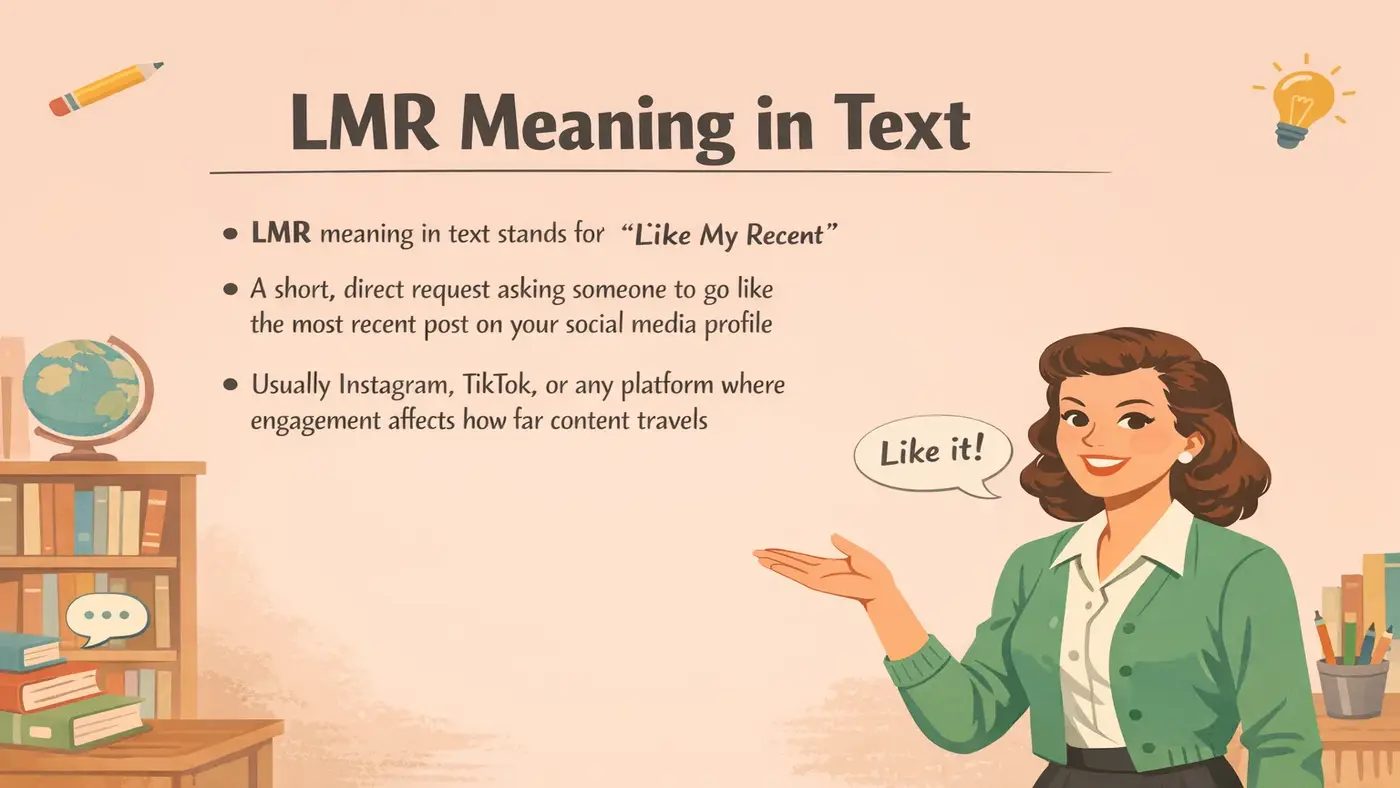
LMR meaning in text stands for “Like My Recent” — a short, direct request asking someone to go like the most recent post on your social media profile, usually Instagram, TikTok, or any platform where engagement affects how far content travels. No preamble. No explanation. Just three letters and an expectation.
People fire it off to close friends, followers, and group chats within minutes of posting something new. Everyone who receives it knows exactly what to do. That clarity is precisely why it works.
Origin and Cultural Footprints
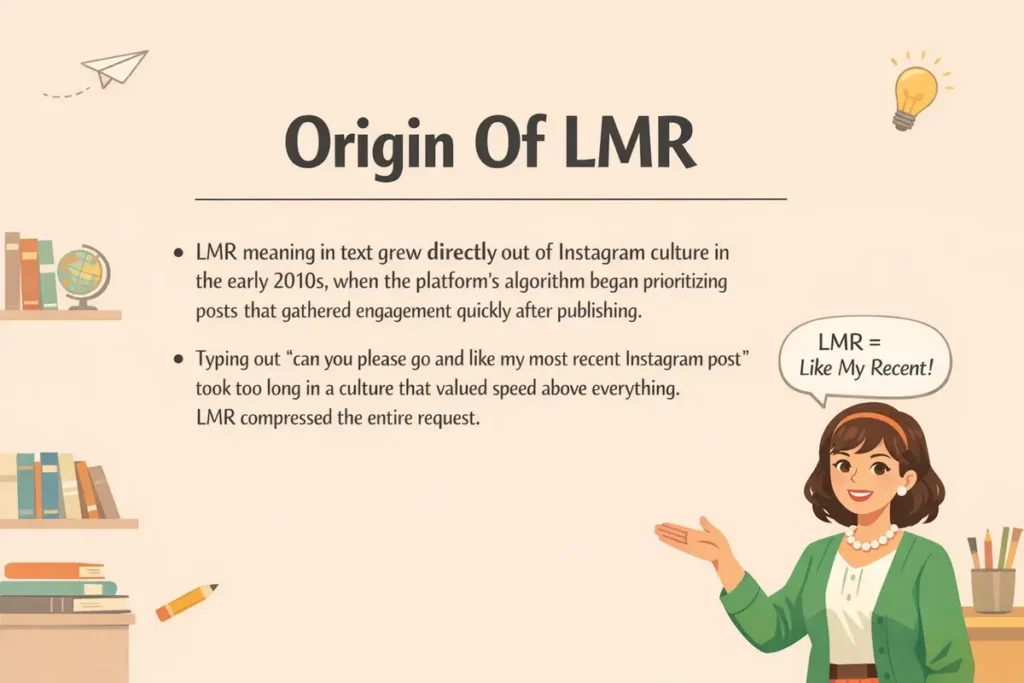
LMR meaning in text grew directly out of Instagram culture in the early 2010s, when the platform’s algorithm began prioritizing posts that gathered engagement quickly after publishing. The faster a post collected likes and comments in its first hour, the wider the algorithm pushed it to new audiences. That mechanic gave people a concrete reason to ask their contacts for immediate support right after posting.
Typing out “can you please go and like my most recent Instagram post” took too long in a culture that valued speed above everything. LMR compressed the entire request into three characters and slipped naturally into DMs, Snapchat messages, and group chats. As TikTok, Twitter, and other platforms adopted similar engagement-driven algorithms, LMR traveled with the behavior pattern that created it.
Other Definitions of LMR
LMR carries a few distinct alternate meanings depending on the community and context:
- Like My Recent — The dominant social media slang meaning. A direct request for post engagement sent right after publishing new content. Used across Instagram, TikTok, Snapchat, and Twitter by anyone who wants their post to perform well in the algorithm window.
- Last Minute Resistance — A term used in specific online dating and social dynamics communities to describe hesitation expressed close to a decision point. This meaning circulates in narrow forum-based communities and carries a completely different social context from the mainstream usage.
- Long-Range Recon or Long-Range Mission — Used in military strategy discussions, war-themed video games, and tactical gaming communities as shorthand for operations conducted at extended distances. Specific, niche, and entirely disconnected from social media slang.
Who Uses It Most?
LMR belongs to people who care about social media visibility and have contacts willing to help them get it. The groups that reach for it most share one thing: they understand how platform algorithms work and want to beat them.
Here is a clear breakdown of who uses LMR most and what drives each group toward it:
| Group | How They Use LMR | Why It Works |
|---|---|---|
| Teen social media users | Sending to friends right after posting a photo or video | Friends support each other’s posts as a social norm |
| Content creators | Requesting quick engagement from followers to boost reach | Early likes directly affect how far the algorithm pushes content |
| Gen Z influencers | Group chats and close-friends lists for immediate post support | Trusted inner circle delivers fast, reliable engagement |
| Gamers with social accounts | Asking community members to support gaming clips | Gaming communities are tight-knit and engagement-supportive |
Usage of LMR in Different Contexts
In personal friend group dynamics, LMR functions as a completely routine social favor with zero ceremony attached. Someone posts a new photo, sends LMR to their five closest contacts, and the likes arrive within minutes. The exchange feels natural inside friendships where supporting each other’s social media presence forms part of daily interaction. Nobody reads deeper meaning into three letters between close friends.
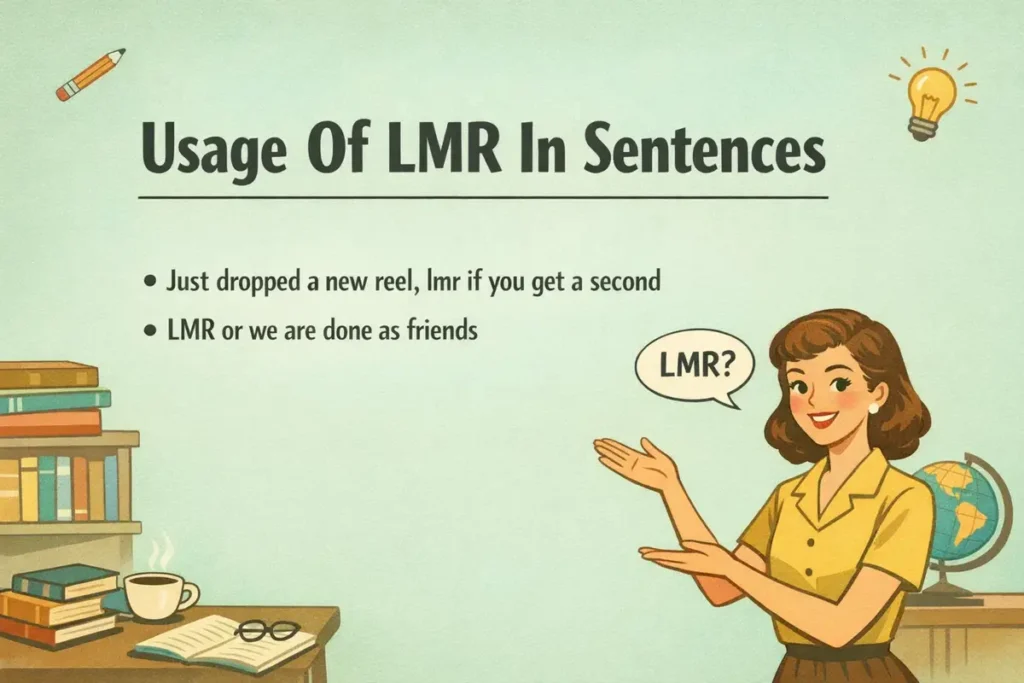
In creator and influencer contexts, LMR carries real strategic weight because the engagement request directly affects post performance and organic reach. A creator sending LMR to their most engaged followers immediately after publishing makes a deliberate move to trigger the algorithm in its first critical window. “Just dropped a new reel, lmr if you get a second” reads casual but serves a specific purpose that goes well beyond wanting a like from someone who cares about them personally.
How Gen Z Uses LMR Today
Gen Z treats LMR as a completely standard part of how social media participation works between friends. Asking for a like carries no awkwardness because supporting each other’s posts feels natural and expected inside close circles. Nobody reads the request as needy or performative. Everyone playing the social media game understands the rules, and LMR is simply how one player asks another to make a move.
The lmr meaning in text also gets a playful treatment in Gen Z exchanges where the ask arrives packaged in humor. “LMR or we are done as friends” sent in a group chat works as an obvious joke that still produces the desired result. The person asking knows it is funny. Everyone receiving it knows it is funny. But most of them go and like the post anyway, which is exactly what the sender wanted from the start.
Does LMR Mean “Last Minute Resistance”?
This definition exists in specific online communities and appears in certain corners of the internet, but treating it as the mainstream meaning of LMR misrepresents how the abbreviation functions in everyday conversation. The Last Minute Resistance definition lives in a narrow, community-specific context that the majority of people sending and receiving LMR have never come across.
When someone texts LMR right after going quiet, or drops it in a group chat minutes after posting, they want engagement on their content. That is the meaning in play across virtually every casual text exchange. The alternate definition only becomes relevant when the surrounding conversation makes that specific community context obvious. In standard social media and texting environments, LMR means Like My Recent, and the surrounding context confirms it every single time.
Meaning Across Social Media
| Platform | LMR Meaning | How It’s Used |
|---|---|---|
| Like My Recent | Direct request to like the most recently published post or reel | |
| TikTok | Like My Recent | Asking followers or friends to like a freshly uploaded video |
| Snapchat | Like My Recent | Sent via DM or group chat right after posting on another platform |
| Twitter / X | Like My Recent | Less common but appears in DMs asking for tweet engagement |
| Like My Recent | Group chat request targeting close friends for quick post support | |
| Discord | Like My Recent | Community server requests for cross-platform post engagement |
Common Confusions & Wrong Interpretations
- LMR confused with LMS — These two abbreviations look nearly identical at speed and both involve social media engagement requests. LMS means “Like My Status,” rooted in older Facebook culture. LMR targets any recent post on any current platform. Swapping them sends the wrong person looking in the wrong place.
- LMR read as a general engagement request — LMR specifically targets the most recent post, not any post on a profile. Responding by liking an older photo misses the point entirely and usually prompts a clarifying follow-up from the sender.
- Last Minute Resistance confusion in mixed contexts — Someone familiar with specific online dating forums might read LMR differently from the vast majority of text users. Platform context and the surrounding conversation separate these two meanings cleanly in almost every real-world exchange.
- Mass sending LMR to wrong contacts — People occasionally blast LMR to their entire contact list rather than just close friends. Receiving this from an acquaintance or professional contact can feel unexpected and out of place given the casual nature of the request.
Similar Terms, Alternatives & Related Slang
- LMS — Like My Status; older Facebook-era engagement request with the same general function as LMR
- F4F — Follow for Follow; mutual follower exchange request common on Instagram and TikTok
- L4L — Like for Like; reciprocal engagement agreement between two social media users
- HMU — Hit Me Up; invites contact rather than requesting engagement but carries similar casual energy
- Drop a like — Written-out version of the same request; warmer in tone than LMR
- Engage — Broader creator-community request for any form of interaction on a post
- Comment below — Targets comments rather than likes as the desired engagement action
- Share this — Requests post amplification rather than a simple like interaction
How to Reply When Someone Sends You LMR
If someone close to you sends LMR, the cleanest response is to go like the post and send a quick “done” or “liked” back. That confirms you followed through and keeps the exchange brief. Most people sending LMR want action more than a lengthy conversation about it.
If you cannot engage at that moment or do not use the platform they posted on, a short honest reply handles it without leaving them waiting. “Not on that app right now but will get to it later” or “not using Instagram anymore, sorry” sets a clear expectation without friction. LMR is a low-stakes ask, and it deserves a low-stakes answer in return.
Conclusion
LMR meaning in text is one of the most practical and direct abbreviations that social media culture produced. It asks for something specific, sends fast, and everyone receiving it knows exactly what to do next. Clean, efficient, and built for how people actually chase engagement today.
Three letters. One clear ask. Zero ambiguity.
FAQs
LMR stands for “Like My Recent” — it’s basically someone asking you to go like their latest post on Instagram or any other social media platform.
In dating, LMR means “Last Minute Resistance” — it refers to hesitation someone shows right before a big step, and honestly respecting that is always the right move.
LMS stands for “Like My Status” — a classic social media call-out asking friends to engage with their post, mostly popular back in the Facebook era.
Instead of LMR you can simply say “Go like my new post!” or “Check out my latest and drop a like” — it sounds more natural and less robotic honestly.
LMR is most commonly used on Instagram, Snapchat, and Twitter — wherever people post regularly and want a quick boost of engagement from their followers and friends.

GenZ Slang Writer & Internet Culture Expert Layla Brooks has spent 2+ years tracking how GenZ slang evolves across TikTok, Twitter, and everyday conversations. From decoding viral phrases to explaining what words actually mean in real life, Layla writes content that feels native to the culture, not forced. If a word is trending, Layla already knows what it means and why it matters.