DMN Meaning in Text: Origin, Cultural Footprint, And Usage
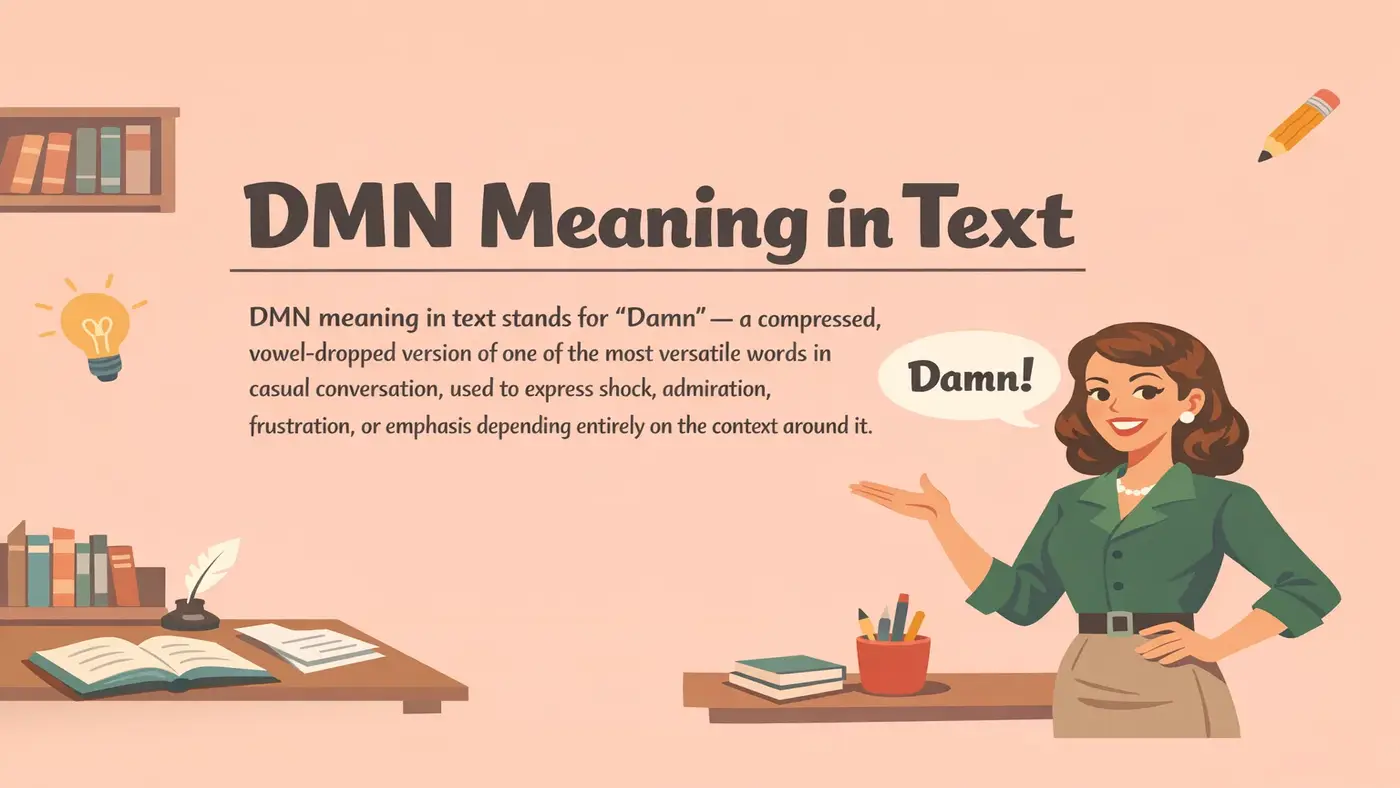
DMN meaning in text stands for “Damn” — a compressed, vowel-dropped version of one of the most versatile words in casual conversation, used to express shock, admiration, frustration, or emphasis depending entirely on the context around it. It’s not a new word. It’s an old word, typed faster.
You’ll see it after a surprising reveal, a genuinely impressive flex, or a moment of pure exasperation. Same three letters. Wildly different emotional registers. That flexibility is exactly what makes it stick.
Origin and Cultural Footprints
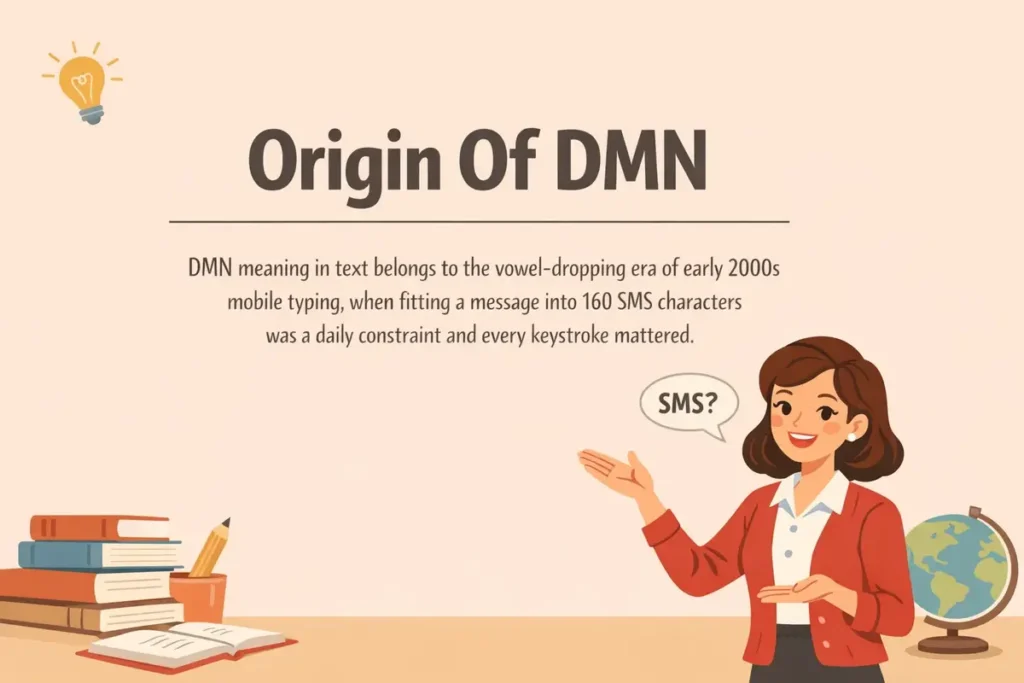
DMN meaning in text belongs to the vowel-dropping era of early 2000s mobile typing, when fitting a message into 160 SMS characters was a daily constraint and every keystroke mattered. “Damn” lost its vowels the same way “never” became “nvr” and “great” became “gr8.” The logic was pure efficiency. The habit outlasted the limitation.
What carried DMN past the Nokia era was the staying power of “damn” itself. Few English words cover as much emotional ground. Shock, awe, disappointment, attraction, sympathy — “damn” handles all of it, and DMN inherited that range completely. As texting culture migrated to unlimited messaging on smartphones and then to social platforms, DMN traveled with it because the emotion it carried never went out of style.
Other Definitions of DMN
Outside of casual text slang, DMN shows up in several distinct professional and technical contexts:
- Default Mode Network — In neuroscience and psychology, the DMN refers to the interconnected brain regions most active during rest, daydreaming, and self-referential thinking. You’ll encounter this in academic papers, psychology articles, and mental health research. Entirely separate from any texting context.
- Decision Model and Notation — In business process management and enterprise software, DMN is a standardized framework used to define and document business decision logic. It sits alongside BPMN (Business Process Model and Notation) in technical documentation for software architects and analysts.
- Domain Name (informal shorthand) — In some tech communities and developer discussions, DMN occasionally appears as a quick abbreviation for “domain name” in shorthand notes or chat logs. Uncommon and context-specific, but worth knowing if you work in web development.
Who Uses It Most?
DMN is a high-frequency reaction word. It shows up across age groups and platforms because the feeling it captures — that sharp, wordless moment of “damn” — is genuinely universal. But some groups reach for it more consistently than others.
Here is a breakdown of who uses DMN most and why it works for each group:
| Group | How They Use DMN | Why It Works |
|---|---|---|
| Teenagers | Reacting to surprising news, expressing admiration | Fast, familiar, emotionally precise |
| Gen Z | Ironic admiration, exasperated reactions, emphasis | Flexible enough to carry multiple tones at once |
| Gamers | Reacting to impressive plays or frustrating losses | Low-effort response with maximum expressive range |
| Twitter / X users | One-word reactions to viral posts or surprising takes | Economical and punchy in a character-conscious space |
| Close friend groups | Any context where tone is already established | Shared familiarity makes the shorthand read instantly |
| Content creators | Comment replies and caption reactions | Signals authentic, unfiltered response to the audience |
Usage of DMN in Different Contexts
In personal texting, DMN lands as a genuine reaction shot — the kind of response that needs no follow-up because it says everything by saying almost nothing. Someone shares that they just got the job, the apartment, the callback they’ve been waiting months for. The reply is “dmn congratulations” and the compression of dmn actually adds weight rather than removing it. It signals that the reaction was immediate, unfiltered, and real.
In social media comment sections, DMN gets dropped under photos, videos, and posts as a standalone expression of admiration or disbelief. A fitness transformation post, an unexpected career announcement, a genuinely funny clip. The comment “dmn” under any of those reads as pure, direct reaction without any of the hollow enthusiasm of “wow amazing!!” The brevity is what makes it feel sincere.
How Gen Z Uses DMN Today
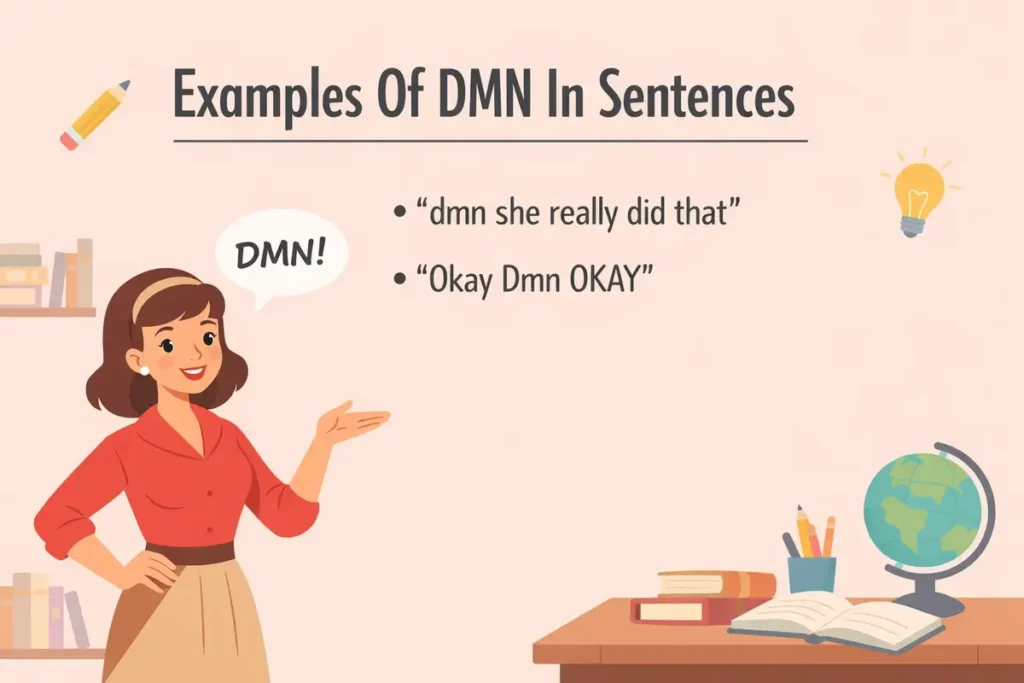
For Gen Z, DMN carries distinct tonal layers that shift depending on what surrounds it. “Dmn okay” after someone does something impressive is warm and approving. “Okay Dmn OKAY” with capitalization is louder and more emphatic. “dmn.” with a period and lowercase is flat, slightly tired, and often signals that the thing being reacted to is absurd rather than impressive. Punctuation and capitalization do the emotional work that tone of voice would handle in speech.
The ironic deployment is where Gen Z adds its own signature. DMN gets used to react to completely mundane, unremarkable things as though they’re extraordinary — which turns the expression into a joke rather than a genuine reaction. Posting “dmn she really did that” under a video of someone doing something entirely ordinary is a format Gen Z runs constantly, and it works because the audience already knows the word well enough to catch the irony in it being misapplied.
Does DMN Mean “Damn It”?
This reading comes up occasionally and makes phonetic sense, but it doesn’t reflect how DMN actually functions in text conversations. “Damn it” is a specific expression of frustration with a direct object — something went wrong, and you’re naming that frustration. DMN is broader. It reacts to situations without specifying direction. It can express admiration, shock, sympathy, or exasperation all within the same three-letter footprint.
If someone typed DMN specifically to mean “damn it,” the surrounding message would almost certainly make that clear through context. A standalone “dmn” without any frustrated context before it is almost never expressing “damn it.” It’s expressing reaction. The distinction is subtle but it matters, because misreading DMN as a frustration signal when it was intended as admiration can make a response feel completely tone-deaf.
Meaning Across Social Media
| Platform | DMN Meaning | How It’s Used |
|---|---|---|
| Damn | Personal and group chat reactions to surprising or impressive news | |
| Twitter / X | Damn | Standalone reaction to viral posts, surprising takes, or impressive announcements |
| Snapchat | Damn | Quick reactions to photos, videos, and stories from close contacts |
| Damn | Comment section reactions to photos, reels, and personal updates | |
| TikTok Comments | Damn | Reacting to impressive content, plot twists, or genuinely funny videos |
| Discord | Damn | Server and DM reactions in both gaming and general community servers |
| Damn | Comment thread reactions to surprising stories or impressive achievements |
Common Confusions & Wrong Interpretations
- DMN confused with DM — These two look similar enough to cause a double-take, especially in fast-moving chats. DM means “Direct Message.” DMN means “Damn.” Misreading one as the other changes the entire sentence and occasionally causes genuine confusion in thread replies.
- Reading DMN as an acronym rather than a compression — Because most three-letter text abbreviations expand into phrases (NGL, SMH, WTF), some people try to expand DMN into a phrase rather than recognizing it as a single compressed word. It’s not an acronym. It’s just “damn” with the vowels removed.
- Tone mismatch across platforms — DMN reads as completely natural in a WhatsApp exchange or an Instagram comment. The same abbreviation dropped into a professional Slack channel or a formal email would look jarring and out of place. The word doesn’t change. The context decides whether it fits.
- Confusing DMN with DamnN or DMMN — Typographical variations sometimes create near-misses that don’t carry the same meaning. DMN is the recognized, widely understood compression. Variations with extra letters are usually just typos rather than intentional alternative spellings.
Similar Terms, Alternatives & Related Slang
- Damn — The full word; used when someone wants visible weight and emphasis rather than speed
- Bruh — Reaction to something surprising or absurd; overlaps with DMN in disbelief contexts
- Lowkey — Understated reaction; softer and more reflective than the directness of DMN
- No way — Disbelief and mild refusal combined; slightly more verbal than DMN
- Sheesh — Admiration or exaggerated reaction; close cousin to DMN in the admiration register
- Oof — Sympathy or secondhand pain; used where DMN might express frustration
- IYKYK — “If You Know You Know”; shares DMN’s economy of expression in a different format
- FR — “For Real”; often follows DMN to double down on the reaction
How to Reply When Someone Sends You DMN
If someone sends you DMN after something you shared, read what came before it. If it follows good news or an achievement, it’s admiration and the natural response is to keep the momentum going. “Right?? Still can’t believe it” or “honestly same, took forever” matches the energy and keeps the conversation warm without making too much of a single three-letter reaction.
If the DMN reads more like frustration or sympathy, responding to the emotion rather than just the word is the better move. “I know, it’s a lot” or “yeah, not ideal” acknowledges what they’re reacting to and moves the conversation forward. The dmn meaning in text tells you the emotional temperature of the message, but it’s the content around it that tells you exactly what kind of response the moment actually needs.
Conclusion
DMN meaning in text is three letters doing the work of a hundred. It means damn, it reacts to everything, and it belongs to conversations that move fast. Simple, direct, and almost impossible to misuse.
One word. Every emotion. That is why it lasted.
FAQs
DMN is not rude on its own — context decides the tone. The same word reads as admiration in one message and frustration in another.
Gen Z uses it, but millennials coined it during the SMS era. It just never went away.
DMN stands for “Damn” with the vowels dropped for speed. People use it to react to anything shocking, impressive, or frustrating.
DYM means “Do You Mind” — a quick way to ask permission or check if something bothers someone. Short, casual, and straight to the point.
Daym is a dramatic spelling of “damn” used when a regular reaction feels too plain. It adds extra emphasis without adding extra words.
DSMN is an extended spelling of “damn” used for added emphasis in casual texting. Some communities also use it as shorthand for “Don’t Share My Name.”

GenZ Slang Writer & Internet Culture Expert Layla Brooks has spent 2+ years tracking how GenZ slang evolves across TikTok, Twitter, and everyday conversations. From decoding viral phrases to explaining what words actually mean in real life, Layla writes content that feels native to the culture, not forced. If a word is trending, Layla already knows what it means and why it matters.