Smut Book Meaning: What Everyone on BookTok Already Knows
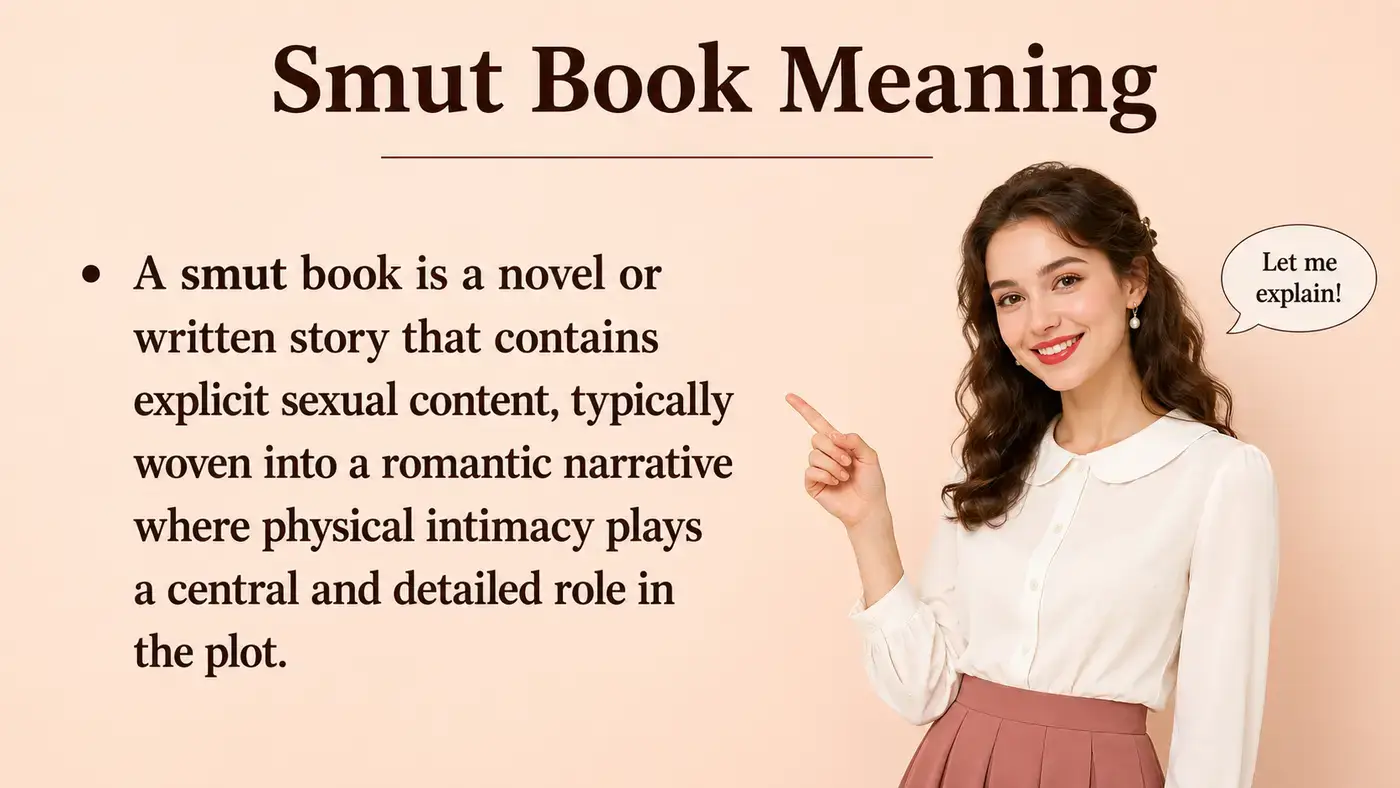
A smut book is a novel or written story that contains explicit sexual content, typically woven into a romantic narrative where physical intimacy plays a central and detailed role in the plot.
It’s not a genre label you’ll find on a bookstore shelf. It’s the term readers actually use among themselves, honest and direct, to describe books where the romantic tension gets resolved in very explicit detail.
Evolution of Smut Books
Smut book meaning as a cultural concept predates the internet entirely. Explicit romantic fiction has existed for centuries, from early erotic literature in the 1700s to the romance novel boom of the 1970s and 1980s when publishers like Harlequin made explicit romantic fiction a mainstream commercial category.
The word “smut” itself carried a negative connotation for decades, used to shame readers, mostly women, for their reading preferences.
The shift happened on TikTok around 2020 and 2021 when BookTok, the book-loving corner of the platform, reclaimed the term entirely. Readers started recommending smut books openly, proudly, and without apology, turning what was once a dismissive label into a search term, a community identifier, and a genuine book discovery category with millions of engaged readers behind it.
Difference Between Smut Books and Romantic Books
This distinction trips people up constantly and it’s worth getting exactly right before going any further.
A romance book focuses on the emotional relationship between characters. The love story is the engine. Physical intimacy may appear but it’s not the primary focus and the explicit detail is often limited or implied rather than described.
A smut book places explicit sexual content at the center of the reading experience. The scenes are detailed, frequent, and written with intention. The emotional story still exists but the physical content is a core selling point, not a background element.
- Romance: Emotional arc is the priority. Physical scenes are present but restrained.
- Smut: Explicit scenes are central, detailed, and expected by the reader from the start.
- Smut with plot: A popular community phrase describing smut books that also carry a genuinely compelling emotional or narrative story alongside the explicit content.
Other All Meanings of Smut
Outside of the book context, “smut” carries a couple of other meanings worth knowing.
- Smut as a general obscenity label — In broader usage, smut refers to any material considered sexually obscene or offensive, not limited to books. Films, images, and websites all get labeled as smut in this general sense.
- Smut as a plant disease — In agriculture and botany, smut refers to a fungal disease that affects cereal crops like wheat and corn, producing dark powdery spores. This meaning is entirely separate from the cultural one and lives exclusively in agricultural and scientific contexts.
Neither of these alternate meanings overlaps with how BookTok and reading communities use the term today. Context makes the intended meaning obvious within seconds of reading the surrounding conversation.
Why Does Smut Have So Many Different Definitions
“Smut” is an old English word that originally referred to dirt, soot, or dark marks. Its application to obscene material came from that same idea of something staining or corrupting, which is how language borrowed it into moral judgment territory centuries ago.
Different communities then pulled the word in their own directions without coordinating. Farmers kept the agricultural meaning. Critics and moralists kept the obscenity label. And readers on BookTok reclaimed it entirely as a positive, neutral, and even proud descriptor for a specific type of fiction they genuinely love.
Who Uses It Most
Smut book as a term circulates most heavily in reading communities, particularly online spaces where book recommendations drive significant cultural conversation.
| Group | How They Use It | Typical Context |
|---|---|---|
| BookTok creators | Book recommendations and reviews | TikTok videos and comment sections |
| Romance readers (Gen Z and Millennials) | Genre self-identification | Goodreads, Instagram, group chats |
| Book club communities | Reading list curation | Discord servers and Reddit threads |
| Online book retailers | Informal search and categorization | Amazon reviews and reader forums |
BookTok creators carry the term the hardest and the most visibly. Their recommendation videos have introduced millions of readers to specific titles under the smut book label, making it one of the most searched book-related phrases on the internet.
Real Conversation Examples Using Smut
1. BookTok recommendation request in a comment section
Reader commenting under a book review video
A: “I need a smut book recommendation that actually has a good plot too, everything I’ve read lately has been boring.” B: “Fourth Wing. Read it immediately. Plot is incredible and it has everything you’re looking for.” A: “Adding it to my list right now, thank you.”
Context: Standard BookTok book recommendation exchange. Smut here signals the reader wants explicit content alongside narrative quality. How to reply: Give a specific title and a brief reason. Vague suggestions don’t help in book communities.
2. Friends texting about a book one of them just finished
Two friends in an iMessage conversation
A: “I stayed up until 3am finishing that book you sent me.” B: “The smut got you didn’t it.” A: “I was NOT prepared. I thought it was a fantasy novel.” B: “It’s both. That’s the best kind.”
Context: Casual friend conversation about a book that delivered unexpected explicit content. How to reply: Lean into the humor and swap more recommendations. This is how book friendships work.
3. Goodreads review or reading group discussion
Online book community thread
A: “I don’t usually read smut books but a friend recommended this one and I genuinely didn’t expect to love it this much.” B: “That’s literally how everyone ends up in this community. One book and suddenly you have a whole shelf.” A: “The character development genuinely surprised me. I came for the plot and stayed for everything else.”
Context: Reader sharing a first experience with the genre in a community space. How to reply: Welcome them warmly and give three to five follow-up recommendations immediately.
Usage of Smut in Different Contexts
In reading communities, smut functions as a completely neutral and practical descriptor. Calling a book a smut book tells potential readers exactly what to expect so they can make an informed choice about adding it to their list.
That transparency is actually what makes the label useful rather than shameful.
In casual conversation between friends, smut lands as a shorthand that immediately communicates both the genre and the tone of what someone is reading. “I’m reading a smut book” tells your friend everything they need to know about why you’ve been glued to your Kindle for three days straight without further explanation required.
How Gen Z Uses Smut Today
Gen Z has completely stripped the shame from the smut book label and replaced it with genuine enthusiasm and community pride. They recommend, review, rank, and debate smut books on every platform available with the same energy and seriousness they bring to any other literary conversation.
What makes Gen Z’s relationship with smut books culturally significant is the explicit rejection of the shame that surrounded this type of reading for decades. They saw their mothers and grandmothers hide romance novel covers on public transport and decided that era was over.
There’s also a craft discussion happening inside Gen Z reading communities that older audiences don’t always see. They debate writing quality, character development, and emotional depth in smut books the same way literary critics discuss any other genre. The explicit content is expected. Everything else is what separates a good smut book from a great one.
Does Smut Mean the Same as Erotica
This is one of the most common search questions in the book community and the distinction is genuinely worth understanding before you walk into a conversation about it.
Erotica is a formal literary genre where sexual content is the primary artistic purpose of the work. The explicit scenes are the point. Everything else serves them.
Smut books, as the BookTok community uses the term, almost always carry a full romantic narrative alongside the explicit content. Characters have arcs. Relationships develop. Plots move. The smut is part of the experience, not the entire experience.
Calling a smut book “erotica” in a reading community conversation will often get a gentle correction, because readers in that space have developed precise vocabulary for a reason.
Meaning Across Social Media
| Platform | Smut Meaning | How It’s Used |
|---|---|---|
| TikTok (BookTok) | Explicit romantic fiction | Book recommendations and reviews |
| Goodreads | Reader genre label | Shelves, reviews, and reading lists |
| Instagram (Bookstagram) | Book photography and recommendations | Caption hashtags and story polls |
| Genre discussion and recommendations | Book subreddits and community threads | |
| Twitter/X | Reading community conversation | Book tweets and recommendation threads |
| Discord | Book club reading selections | Server channels and reading group chats |
TikTok’s BookTok community is the single most powerful driver of smut book discovery and discussion today. Goodreads carries the most organized and searchable version of smut as a community-applied genre label.
Common Confusions and Wrong Interpretations
Smut gets misread and misapplied regularly, especially by people encountering the term through BookTok without prior context.
- Smut vs. romance — Romance and smut overlap but aren’t identical. Romance prioritizes emotional connection. Smut prioritizes explicit content. Many great books deliver both, which is why “smut with plot” became its own community phrase.
- Smut as always low quality — Some people assume smut books are poorly written by default. That’s a prejudice, not a fact. The genre includes genuinely excellent writing alongside titles that prioritize quantity of scenes over quality of prose.
- Smut vs. erotica — As covered above, these terms describe different things in reading community vocabulary. Using them interchangeably signals unfamiliarity with how the community actually talks about these books.
Related Terms
- BookTok — TikTok’s book recommendation community, the primary driver of smut book popularity
- Spicy — A softer, more mainstream-friendly synonym for smut used widely on social media
- Slow burn — A romance where tension builds across a long narrative before resolution
- Enemies to lovers — One of the most popular smut book romantic tropes
- Forced proximity — A plot device where characters are thrown together, common in smut books
- HEA — Happily ever after, the standard romantic resolution readers expect
- OTP — One true pairing, a reader’s favorite romantic couple in a book or series
- Smut with plot — Community phrase for explicit books that also carry strong narrative quality
How to Reply When Someone Says Smut
When someone recommends a smut book to you, the best reply is either a genuine request for more details or an honest note about your comfort level with explicit content. Book communities are welcoming and nobody expects you to pretend enthusiasm you don’t have.
A simple “what’s the vibe like, more plot or more explicit?” gives you the information you need to decide without any awkwardness.
If someone asks you for a smut book recommendation and you read the genre, give them a specific title with a one-line reason rather than a vague gesture toward the whole category. “Try A Court of Thorns and Roses, fantasy world with strong characters and it gets very explicit by book two” is infinitely more useful than “there are lots of good ones.”
Conclusion
Smut book meaning is clear, specific, and completely owned by its reading community now. It describes explicit romantic fiction and carries zero shame in the spaces where it belongs.
Know the term, use it correctly, and you’ll always speak the same language as the people recommending the books worth reading.
FAQs
The word smut originally referred to dirt or soot. Over time, it became slang for explicit or adult themed content.
Different readers consider different books the smuttiest based on romance and explicit scenes. Popular adult romance novels are often mentioned online.
Spicy books include some romantic or intimate scenes, while smutty books focus more heavily on explicit adult content.
There is no single official spiciest book because opinions vary by reader. Many dark romance and adult fiction titles are known for intense scenes.
A smut book means a novel with explicit romantic or sexual content. People often use the term casually on social media and book communities.

GenZ Slang Writer & Internet Culture Expert Layla Brooks has spent 2+ years tracking how GenZ slang evolves across TikTok, Twitter, and everyday conversations. From decoding viral phrases to explaining what words actually mean in real life, Layla writes content that feels native to the culture, not forced. If a word is trending, Layla already knows what it means and why it matters.