WDP Meaning in Text: Explained Everything 2026
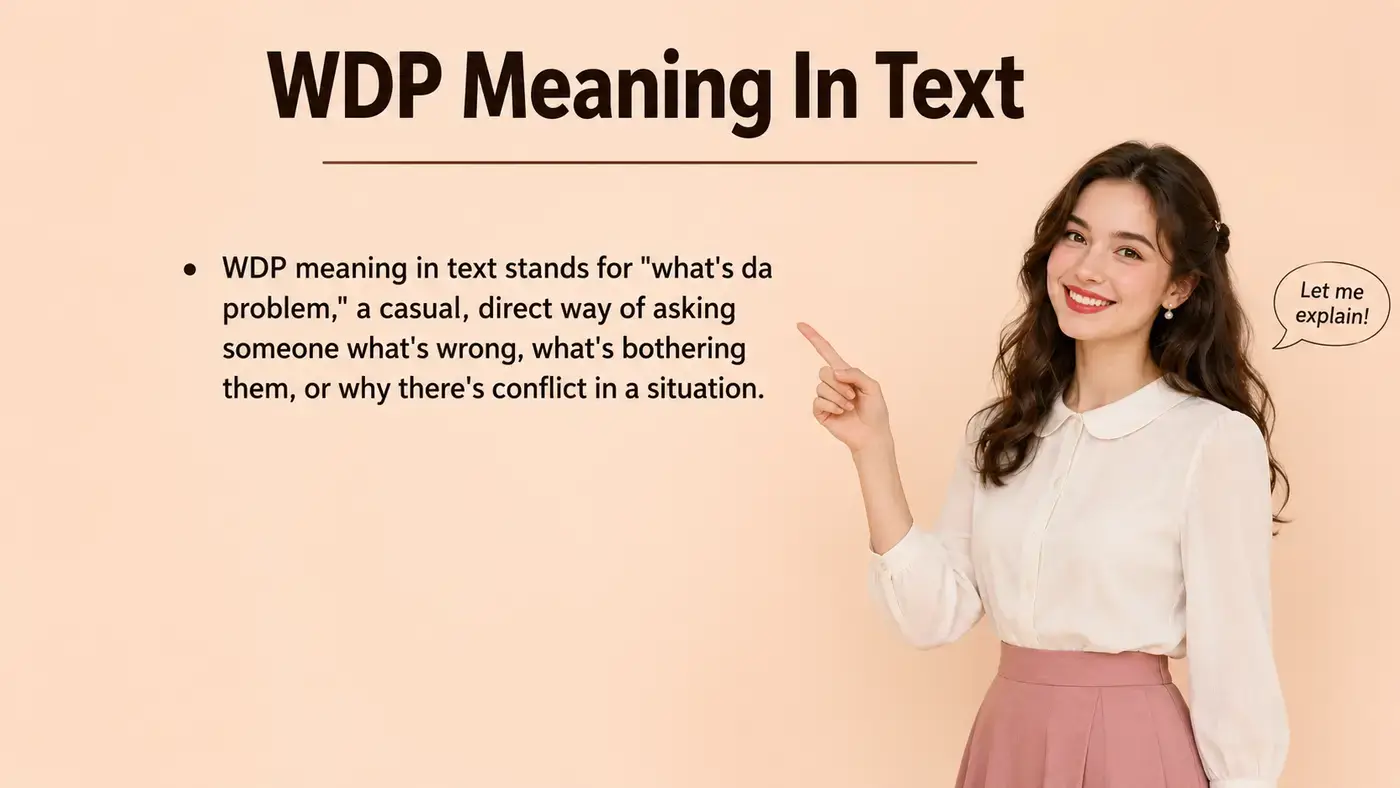
WDP meaning in text stands for “what’s da problem,” a casual, direct way of asking someone what’s wrong, what’s bothering them, or why there’s conflict in a situation.
It’s short. It’s pointed. And depending on the tone behind it, WDP can read as genuine concern or a straight-up challenge with zero middle ground.
Origin and Cultural Footprints
WDP meaning in text grew out of Black American internet slang culture in the early 2010s, riding the same wave as abbreviations like WYD, WYA, and WYM that compressed everyday spoken questions into fast texting shorthand.
“What’s da problem” was already common in spoken conversation as both a genuine question and a confrontational challenge before it ever got abbreviated.
Twitter and early Instagram carried WDP into mainstream digital vocabulary as platforms where fast, punchy communication drove the most engagement. By the mid-2010s it had embedded itself naturally into group chats, DMs, and comment sections across the US.
Other All Meanings of WDP
WDP carries a couple of alternate meanings in spaces far removed from everyday texting culture.
- WDP = Windows Driver Package — A technical term in software and IT development referring to packaged files used to install hardware drivers on Windows systems. Lives entirely in tech forums and developer documentation.
- WDP = Wireless Data Protocol — A telecommunications term used in older mobile network architecture discussions. Shows up in legacy tech documentation and engineering spaces, nowhere near casual conversation.
Both alternate meanings exist in highly specific professional environments. If someone in a general group chat sends you WDP, they’re almost certainly not discussing software drivers.
Why Does WDP Have So Many Different Definitions
Three letters with no strong semantic anchor will always attract multiple meanings from communities operating independently. Tech industries claimed WDP for their own terminology long before texting slang culture existed.
The everyday texting meaning wins every time in casual conversation because the volume of people using it that way simply overwhelms everything else. Context is the only decoder you need here.
Who Uses It Most
WDP circulates most heavily in communities where direct, unfiltered communication is the norm.
| Group | Common Meaning | Typical Context |
|---|---|---|
| Gen Z texters | What’s da problem | DMs, group chats, comment replies |
| Hip hop culture | Confrontational challenge | Social media and direct messages |
| General texters | Genuine concern question | Personal everyday conversations |
| IT and tech professionals | Windows Driver Package | Developer forums and documentation |
Gen Z and communities influenced by hip hop culture carry the texting meaning hardest. The IT meaning stays completely contained within professional tech spaces and never leaks into casual conversation.
Real Conversation Examples Using WDP
1. Genuine concern between close friends
Between two friends over iMessage after one goes quiet for days
A: “You’ve been off lately, WDP?” B: “Honestly just overwhelmed, got a lot going on right now.” A: “Say less, I’m here whenever you’re ready to talk.”
Context: WDP used as a caring check-in between people with an established close friendship. How to reply: Meet the concern with honesty. They asked because they noticed.
2. Confrontational challenge in a group chat
Between friends after tension builds over a misunderstanding
A: “You’ve been acting distant all week and I’m not sure why.” B: “WDP exactly? Because I feel like you’re mad at me for something.” A: “I just felt left out of the plans, that’s it.”
Context: WDP used to surface a conflict directly rather than let it sit. How to reply: Address the question honestly. Dodging it makes the tension worse, not better.
3. Public comment section challenge
Twitter reply under a post where someone made a vague indirect comment
A: “Some people really need to learn how to stay in their lane.” B: “WDP? Say the name or keep it moving.”
Context: Classic public use of WDP as a call-out, demanding specificity instead of vague shade. How to reply: Either be direct about what you meant or acknowledge it wasn’t worth posting.
Usage of WDP in Different Contexts
In personal texting between close friends, WDP reads as care with an edge. It says “I see something’s off and I’m not going to pretend I don’t.” That directness is actually a form of respect in tight friendships.
“Hey WDP, you’ve been quiet all week” signals attention, not aggression, when it comes from someone who genuinely knows you.
In conflict situations or public spaces, WDP sharpens entirely into a challenge. It demands an answer and signals that the person sending it is done with vagueness.
“WDP because you’ve been making comments all night” is not a gentle check-in. That’s someone ready to address something directly.
How Gen Z Uses WDP Today
Gen Z deploys WDP across a surprisingly wide emotional spectrum. In vulnerable moments between close friends it functions as an invitation to be real without a long setup. Three letters that say “you can tell me.”
That efficiency with emotional communication is distinctly Gen Z. They value getting to the point, and WDP does exactly that without requiring a paragraph of preamble first.
In conflict or confrontational contexts, WDP signals that someone is done absorbing tension silently. It’s a line in the sand disguised as a question. Gen Z uses it publicly and privately with equal confidence, and the energy behind it is always immediately readable to anyone in their cultural orbit.
Does WDP Mean What Do People
Some people read WDP as “what do people” and assume it’s the start of a longer rhetorical question about public opinion or behavior. That’s a misread that surfaces more often than you’d expect.
WDP in mainstream texting culture stands for “what’s da problem” and has never carried “what do people” as a recognized mainstream meaning. The confusion usually comes from people trying to decode unfamiliar abbreviations by building words from the letters without checking cultural context first.
If someone sends you WDP in a personal conversation, they’re asking about a specific situation, not making a broad statement about people in general.
Meaning Across Social Media
| Platform | WDP Meaning | How It’s Used |
|---|---|---|
| iMessage / SMS | What’s da problem | Direct personal check-ins and conflict signals |
| Twitter/X | What’s da problem | Public call-outs and challenge replies |
| What’s da problem | DM conversations and comment responses | |
| TikTok | What’s da problem | Comment section reactions and responses |
| Snapchat | What’s da problem | Personal daily conversations |
| Discord | What’s da problem | Server chats and direct message exchanges |
Twitter and Instagram are where WDP sees the most confrontational use. iMessage and Snapchat carry the more personal, concern-driven version of it between people who actually know each other well.
Common Confusions and Wrong Interpretations
WDP creates a few specific misreads that come up regularly enough to address directly.
- WDP vs. WYP — WYP means “what’s your problem” and carries noticeably more aggression than WDP. WDP can be genuinely curious. WYP almost always signals irritation from the jump.
- WDP vs. WYD — WYD means “what you doing” and is a casual social opener. WDP asks about a problem or conflict specifically. They’re completely different questions that should never be swapped.
- WDP as always confrontational — A lot of people read WDP as aggressive by default because the word “problem” carries confrontational associations. It’s completely neutral until the surrounding tone tells you otherwise. Read the relationship and the conversation, not just the abbreviation.
Related Slang Terms
- WYP — What’s your problem (more aggressive, direct version)
- WYD — What you doing (casual social check-in)
- WYA — Where you at (location-based version of reaching out)
- WYM — What you mean (request for clarification)
- ISTG — I swear to God (frustration intensifier often used near WDP in conflict)
- NGL — Not gonna lie (honesty signal, sometimes precedes a WDP answer)
- ICL — I can’t lie (similar honesty signal in vulnerable WDP responses)
- FR — For real (sincerity emphasis, often follows WDP when something serious is being addressed)
How to Reply When Someone Says WDP
When WDP comes from a place of genuine concern, open up at whatever level feels right for you. They’re not pushing for everything at once. A simple “I’ve just been stressed, I’ll explain later” keeps the door open without requiring a full emotional download in that moment.
Acknowledging the question matters even when the full answer isn’t ready yet.
If WDP arrived with a confrontational edge, address it directly and stay calm. Matching aggression with aggression turns a resolvable tension into an actual argument. Saying “here’s what’s actually going on from my side” gives the conversation somewhere productive to go instead of just escalating the temperature.
Conclusion
WDP meaning in text sits at the exact intersection of care and confrontation, and the only thing that separates them is context. Read the person, read the situation, and you’ll always know which one you’re getting.
Know how to receive it and how to reply, and WDP will never catch you off balance again.
FAQs
WDP can have different meanings in texting depending on context. People often use it as a casual abbreviation in chats.
WD commonly stands for well done or what doing. The meaning depends on the conversation.
WSP stands for what’s up. It is a casual way to greet someone or start a conversation.
PDS is not a fixed slang term and can have multiple meanings. Its definition usually depends on the platform or chat context.
WDT can mean what doing there or similar casual phrases. It is used informally in texting conversations.

GenZ Slang Writer & Internet Culture Expert Layla Brooks has spent 2+ years tracking how GenZ slang evolves across TikTok, Twitter, and everyday conversations. From decoding viral phrases to explaining what words actually mean in real life, Layla writes content that feels native to the culture, not forced. If a word is trending, Layla already knows what it means and why it matters.