WYO Meaning in Text: Origin, Common Confusions, and Usage
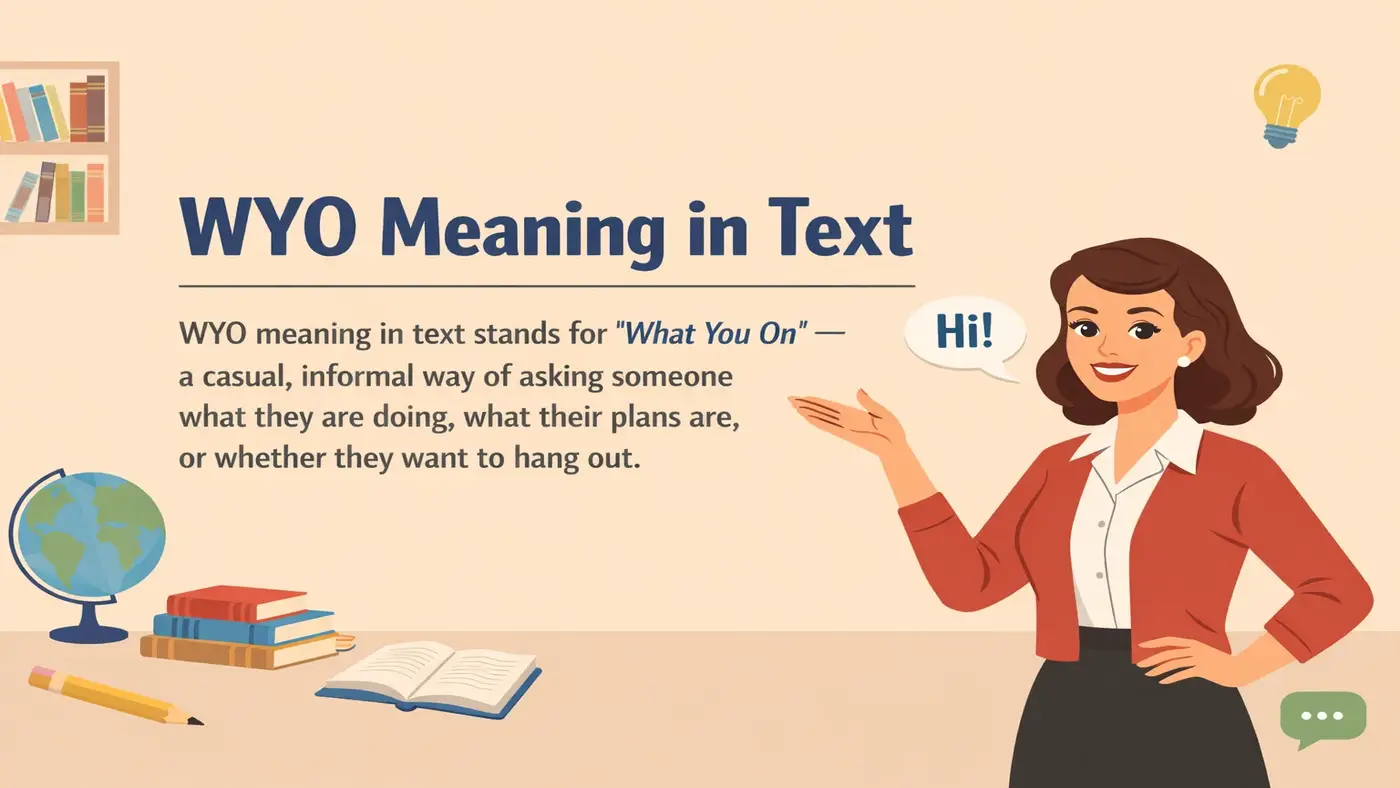
WYO meaning in text stands for “What You On” — a casual, informal way of asking someone what they are doing, what their plans are, or whether they want to hang out. It sits somewhere between “what are you up to” and “you free tonight?” but gets there in three letters.
People send it when they want to check in without making it a big deal. No formality, no long setup. Just WYO, and the ball is in your court.
Origin and Cultural Footprints
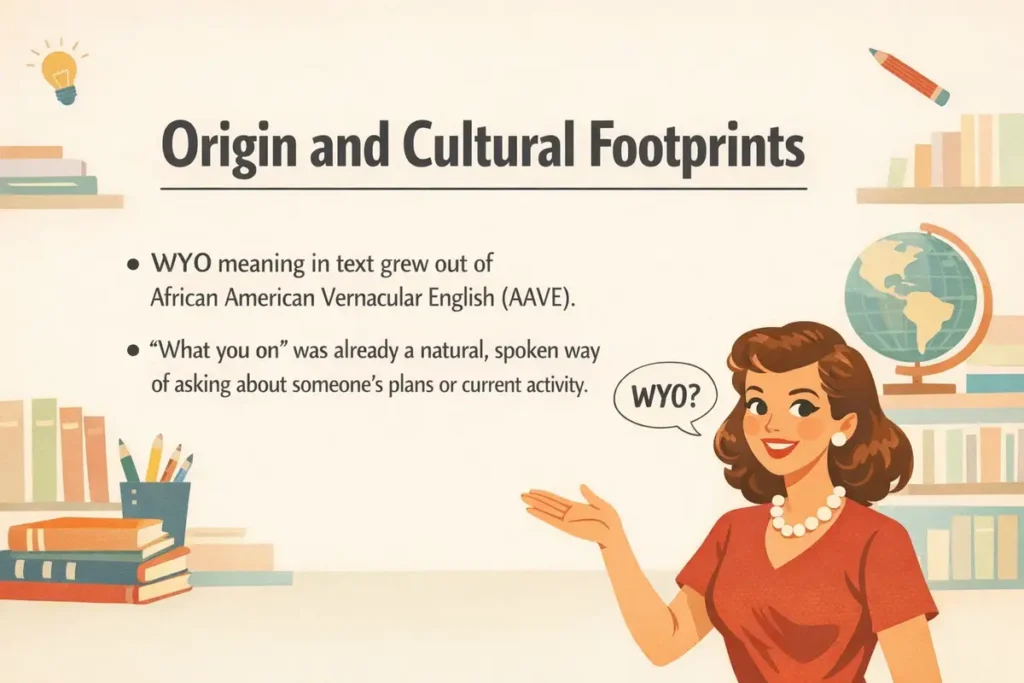
WYO meaning in text grew out of African American Vernacular English (AAVE), where “what you on” was already a natural, spoken way of asking about someone’s plans or current activity. Digital communication picked it up and compressed it the same way it compressed everything else — drop the spaces, keep the energy, send it fast.
The abbreviation spread through Black Twitter, hip-hop culture, and urban slang communities online before crossing into mainstream Gen Z texting vocabulary through Snapchat and Instagram DMs in the mid-2010s. That crossover pattern is consistent with how most AAVE-rooted slang travels online. It starts in specific cultural spaces, gets picked up by adjacent communities, and eventually lands in group chats everywhere.
Other Definitions of WYO
WYO carries a few alternate meanings depending on where you encounter it:
- Wyoming — The most established non-slang use. WYO serves as an informal abbreviation for Wyoming, the US state. You will see it in travel content, geographic references, sports coverage, and casual conversation about American locations.
- Watch Your Output — A phrase occasionally abbreviated as WYO in certain professional and tech communities, particularly in software development and project management contexts where output quality and productivity matter. Rare outside those specific spaces.
- What You On (alternate interpretation) — Some users read WYO as “What Are You On?” carrying a slightly different tone, implying the other person is behaving strangely or saying something confusing. Context separates this from the standard “what are your plans” meaning immediately.
Who Uses It Most?
WYO belongs to people who communicate casually and quickly. It does not belong in formal exchanges and it does not show up in professional messaging. The groups that use it most share one thing: they text the way they talk.
Here is a clear breakdown of who reaches for WYO and how each group deploys it:
| Group | How They Use WYO | Why It Works |
|---|---|---|
| Gen Z | Opening conversations, checking availability, casual hangout invites | Fast, low-effort, signals a relaxed social vibe |
| Teenagers | Snapchat and iMessage check-ins with close friends | Matches the speed and informality of daily texting |
| College students | Coordinating plans in group chats | Covers “you free?” and “what’s the plan?” in one word |
| Hip-hop and urban culture communities | Everyday conversation and social media interaction | Rooted in AAVE where the phrase already existed naturally |
| Content creators | Engaging followers in comments and live streams | Approachable, authentic, signals cultural fluency |
| Close friend groups | Any platform where the tone is already familiar | Everyone in the thread already knows what it means |
Usage of WYO in Different Contexts
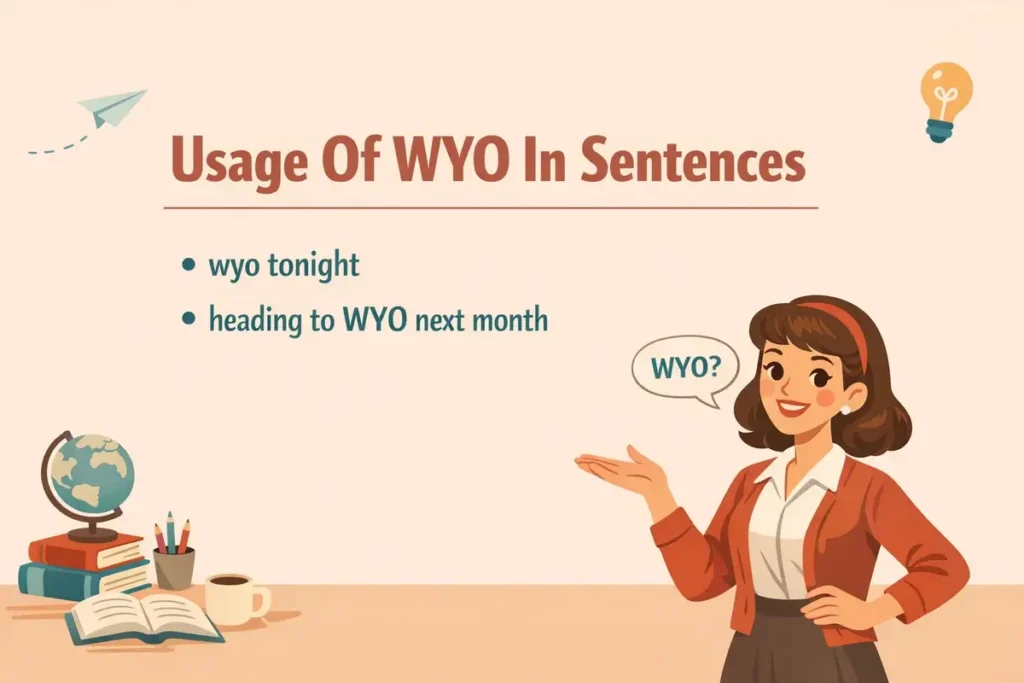
In personal texting, WYO functions as a soft, low-pressure conversation opener. It asks about plans without demanding a response or implying any specific expectation. Someone sending “wyo tonight” to a friend is not making a formal plan — they are leaving the door open and checking if there is any space to walk through it. That casualness is the whole point.
In group chats, WYO works as a quick pulse-check across multiple people at once. Dropping “wyo this weekend” in a group thread asks everyone simultaneously and invites whoever is free to respond. It replaces a much longer coordination message with three letters and trusts the group to fill in the rest.
How Gen Z Uses WYO Today
Gen Z uses WYO as a social signal as much as an actual question. Sending WYO to someone tells them you are thinking about them and open to spending time together without making it sound like a big ask. The low effort of the abbreviation is part of the message. It says “I’m interested but not desperate,” which is exactly the tone most people want in casual social outreach.
The wyo meaning in text also shifts depending on the hour. A WYO at 2 PM reads as a genuine availability check. The same WYO at 11 PM after days of silence reads as something else entirely, and Gen Z knows that perfectly well. They use timing as a layer of meaning that the three letters alone do not carry. Reading a WYO correctly means reading everything around it, not just the abbreviation itself.
Does WYO Mean “I Miss You”?
This interpretation circulates in some corners of social media and it comes from a misread of the emotional context rather than any genuine alternate meaning. WYO meaning in text does not mean “I miss you.” Someone sending WYO after a long gap in conversation might be implying they have been thinking about you, and that warmth can feel like an expression of missing someone, but the word itself does not carry that meaning.
Reading WYO as a coded “I miss you” tends to create confusion because it sets an expectation the sender may not have intended. If someone wanted to say they missed you, they would say it. WYO is a question about availability, not a declaration of feeling. Treating it as more than that often makes the conversation awkward in a direction neither person planned for.
Meaning Across Social Media
| Platform | WYO Meaning | How It’s Used |
|---|---|---|
| Snapchat | What You On | Opening DMs, checking availability, casual hangout invites |
| What You On | DM conversation starters, story replies asking about plans | |
| Twitter / X | What You On | Casual check-ins, replies to posts asking about someone’s activity |
| What You On | Personal and group chat plan coordination | |
| TikTok Comments | What You On | Replying to creators asking about their schedule or activity |
| Discord | What You On | Checking if friends are free to game or talk in a server |
| iMessage | What You On | Standard casual texting between close contacts |
Common Confusions & Wrong Interpretations
- WYO confused with WYD — These two are close siblings but not identical. WYD means “What You Doing” and asks about current activity. WYO means “What You On” and leans more toward plans and availability. People swap them constantly, and while the overlap is real, the subtle difference in intent is worth knowing.
- WYO read as Wyoming — In non-texting contexts, especially sports, travel, or geographic discussions, WYO almost always refers to the state. Someone in a travel forum saying “heading to WYO next month” is not asking about your plans.
- WYO misread as a romantic signal — As covered above, WYO is a casual check-in. People sometimes read romantic intent into it because of who sent it or when they sent it, not because the word itself implies anything. The sender’s identity and timing carry that weight, not the abbreviation.
- Tone mismatch on professional platforms — WYO belongs in casual personal conversations. Sending it in a LinkedIn message, a work email, or a client-facing Slack channel would read as unprofessional and out of place. Platform awareness matters with this one more than most abbreviations.
Similar Terms, Alternatives & Related Slang
- WYD — What You Doing; asks about current activity rather than plans or availability
- HMU — Hit Me Up; invites someone to reach out when they are free, slightly more direct than WYO
- You free? — Straightforward availability check; same function as WYO but written out fully
- Tryna link — Casual expression of wanting to meet up; more direct than WYO
- You up? — Late-night availability check; narrower and more time-specific than WYO
- What’s good? — General check-in greeting with similar casual energy to WYO
- Lmk — Let Me Know; often follows a WYO when the sender wants a clear response about availability
- Down? — Single-word question asking if someone is interested or available; minimal version of WYO
How to Reply When Someone Sends You WYO
If someone sends you WYO and you are free or open to plans, the natural reply names your situation and keeps the door open. “Nothing much, what’s good?” or “Free after 7, what you thinking?” answers the question and hands the conversation back to them without forcing a decision before one is needed. Keep it at the same casual register they set.
If you are not free or not feeling up to it, a short honest answer works better than leaving them on read. “Busy tonight but free this weekend” is clean, warm, and gives them something to work with. WYO is a low-pressure question and it deserves a low-pressure answer either way. Nobody sending those three letters expects a formal response.
Conclusion
WYO meaning in text is a question about plans, wrapped in three letters and sent without ceremony. It opens conversations, checks availability, and signals interest all at once. Simple, efficient, and genuinely useful.
Three letters. One clear invitation. Now you know exactly what to say back.
FAQs
WYO stands for “What You On”, a casual way of asking someone about their plans or whether they want to hang out. Think of it as a relaxed, low-pressure version of “you free tonight?”
If you are free, just say what you are up to and keep it casual — “nothing much, what are you thinking?” works perfectly. If you are busy, a short “tied up tonight but free tomorrow” keeps things warm without overexplaining.
They are close but not identical. WYD asks what you are doing right now, while WYO leans more toward plans and availability. Both feel casual and friendly, but WYO carries a stronger “want to link?” energy.
WYO works great in casual conversations with friends, close contacts, or anyone you text regularly in an informal way. Skip it in professional or formal settings since it reads as too casual for those contexts.
On Snapchat, WYO means exactly the same thing — “What You On” — and people use it to check availability or start a conversation about hanging out. It fits Snapchat’s casual, quick communication style naturally.

GenZ Slang Writer & Internet Culture Expert Layla Brooks has spent 2+ years tracking how GenZ slang evolves across TikTok, Twitter, and everyday conversations. From decoding viral phrases to explaining what words actually mean in real life, Layla writes content that feels native to the culture, not forced. If a word is trending, Layla already knows what it means and why it matters.